
Blykalla Seeks State Aid for Second SMR Plant in Sweden
With a fresh application to create a second small modular reactor plant, Blykalla leverages Sweden's support framework, marking a strategic pivot in Europe's energy landscape.
Published before the sentence-level fidelity gate (September 2026). Figures and attributions in this piece were re-verified afterwards; any change is recorded in the public corrections log. See /corrections →
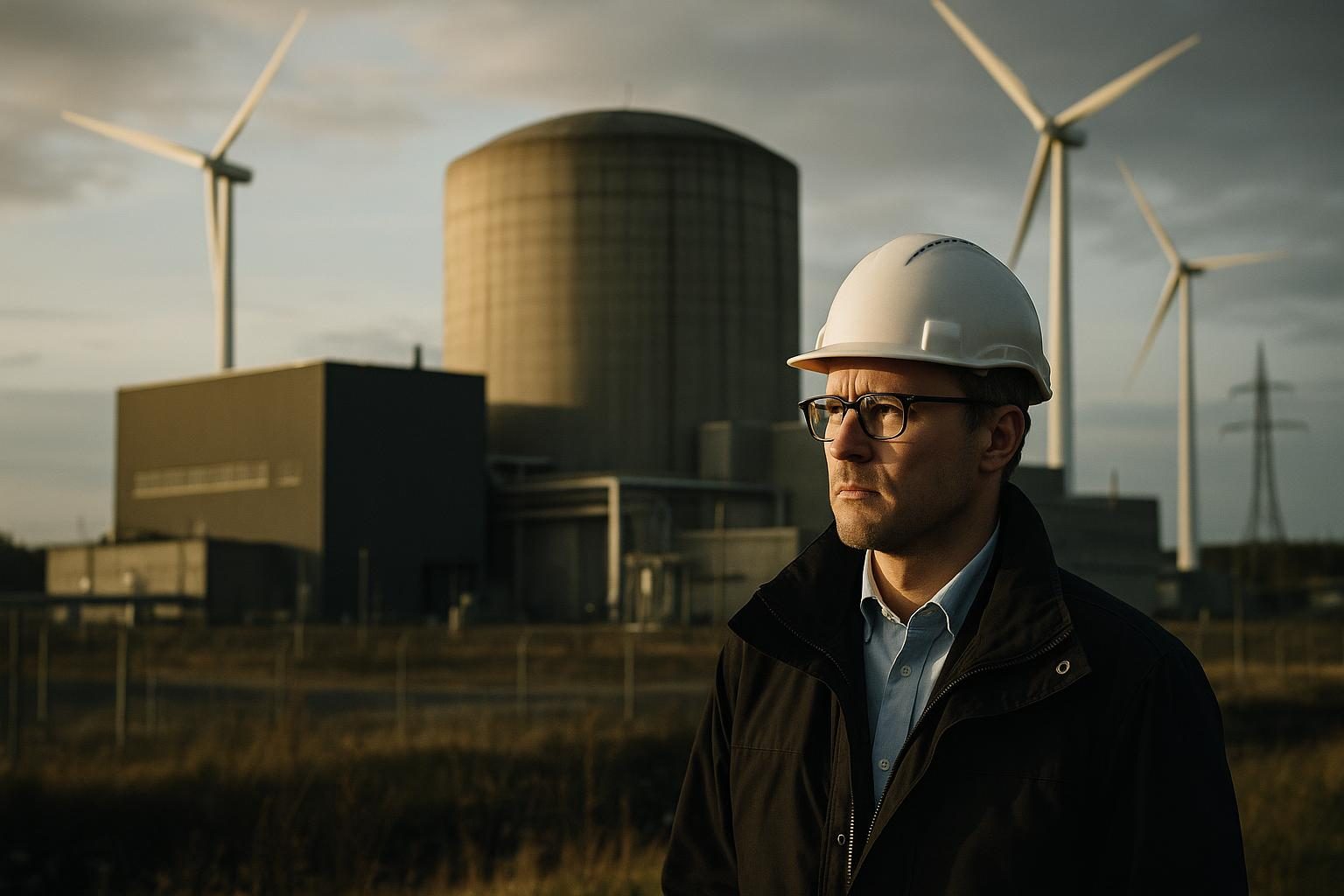
Sweden's Blykalla is charting a new course with its recent application for state aid to build an SMR plant at Untra in Tierp municipality. World Nuclear News reported that this marks Blykalla’s second proposal within a few months, following an earlier plan to develop reactors in Norrsundet. While the nuclear power debate evolves amid climate concerns, Blykalla's move illustrates a broader geopolitical and technological shift towards modular nuclear solutions for clean energy.
A New Dawn for Nuclear Power
Blykalla's project, comprising up to eight lead-cooled reactors with a total capacity of 440 MWe, could symbolize a watershed moment in nuclear technology. This reflects a new strategic pathway laid out by government policies. World Nuclear News details that the Swedish state's 2025 aid framework offers substantial backing, including loans and risk-sharing schemes, to bolster SMR projects. This is part of a grander nuclear roadmap targeting at least 2,500 MWe of new capacity by 2035.
But why now, and why SMRs? Unlike traditional nuclear plants, SMRs promise modularity, safety, and cost-efficiency. Blykalla's lead-cooled design stems from decades of research at KTH Royal Institute of Technology, reinforcing confidence in its viability. The state's support signals a shift in priorities as nations strive to curtail carbon footprints and embrace sustainable, dispatchable energy sources.
A Landscape Redrawn
The implications of this development stretch beyond Sweden's borders. As nuclear power gains renewed traction, primarily for its low emissions, other European nations are reevaluating their energy policies. France, long a nuclear stalwart, is modernizing its fleet, while the UK is exploring SMR technology to replace aging reactors. According to the Swedish government, Blykalla's submission shows growing confidence in SMRs as both technologically sound and financially viable, potentially setting a precedent for cross-border initiatives.
Geopolitically, this move challenges existing energy dynamics, where fossil fuels have long reigned supreme. Europe's push for energy independence, catalyzed by geopolitical tensions and the need to meet climate targets, places nuclear energy at the center of strategic planning. The Swedish state aid model, if successful, could offer a blueprint for international efforts aimed at creating resilient, green energy grids.
Regulatory Hurdles and Environmental Stakes
The regulatory landscape remains a significant hurdle. The Uppsala County Administrative Board is tasked with submitting a comprehensive plan and environmental impact statement by April 2027. This reflects the crucial balance between acceleration and responsibility: the need to expedite clean energy projects while ensuring they align with environmental and safety standards.
Critics often cite concerns about waste management and ecological impact, arguing that nuclear projects may divert resources from renewable technologies like wind and solar. However, proponents like Blykalla emphasize the continuity of dispatchable power that nuclear offers, particularly when renewables fluctuate. This dispatchability is critical for maintaining energy reliability as nations phase out coal and natural gas.
Toward a Modular Future
If Blykalla's timeline holds, with the first Untra reactor potentially operational by the early 2030s, Sweden will take a significant step toward its 2045 target of extensive nuclear capacity. As other nations observe this unfolding initiative, the success of Blykalla's SMR projects could catalyze further innovations, spurring a modular nuclear renaissance.
Yet, the path isn't straightforward. Stakeholders must grapple with public perception and lingering skepticism from past nuclear mishaps. However, the narrative is slowly shifting as more eyes turn to nuclear's capabilities within the broader renewable context. In this situation, Blykalla's efforts are not merely about domestic energy policy; they signify a shift in how nuclear energy could complement other renewables.
As Sweden paves this new path, the story of Blykalla and its small modular reactors serves as a blueprint for experimentation, hope, and perhaps a more sustainable energy system.
The Road Ahead for Blykalla
What changed: Blykalla's application for state aid for a second SMR plant marks a strategic shift in Sweden's energy policy, emphasizing modular nuclear solutions.
Measurable implication: Blykalla's project could contribute to Sweden's goal of achieving at least 2,500 MWe of new nuclear capacity by 2035.
Next dated milestone: No dated milestone is scheduled; the signal to watch is the submission of the environmental impact statement by April 2027.
Strongest counterargument: Critics argue that nuclear projects may divert resources from renewable technologies. Evidence of successful integration with renewables would challenge this view.
Sources
- Blykalla seeks state aid for second SMR plant — World Nuclear News · 2 September 2026
- State aid application for nuclear power project outside Gävle — government.se · date not available
MktInvest Research is MktInvest's automated research desk. Every piece is AI-generated and machine-gated — no human byline is implied. How this works →
Get this in your inbox, weekly
The Friday digest: what changed on every market we track — stances, evidence movement and the facts behind it.
Marketing communication for informational purposes. It does not constitute financial advice or a personalised recommendation (MiFID II). Exposures are discussed at asset-class/ETF level only.