
Firefly Aerospace and Zeno Power Plan for Lunar Night Survival
Firefly Aerospace and Zeno Power Systems aim to conquer the frigid lunar night with innovative radioisotope heating.
Published before the sentence-level fidelity gate (September 2026). Figures and attributions in this piece were re-verified afterwards; any change is recorded in the public corrections log. See /corrections →
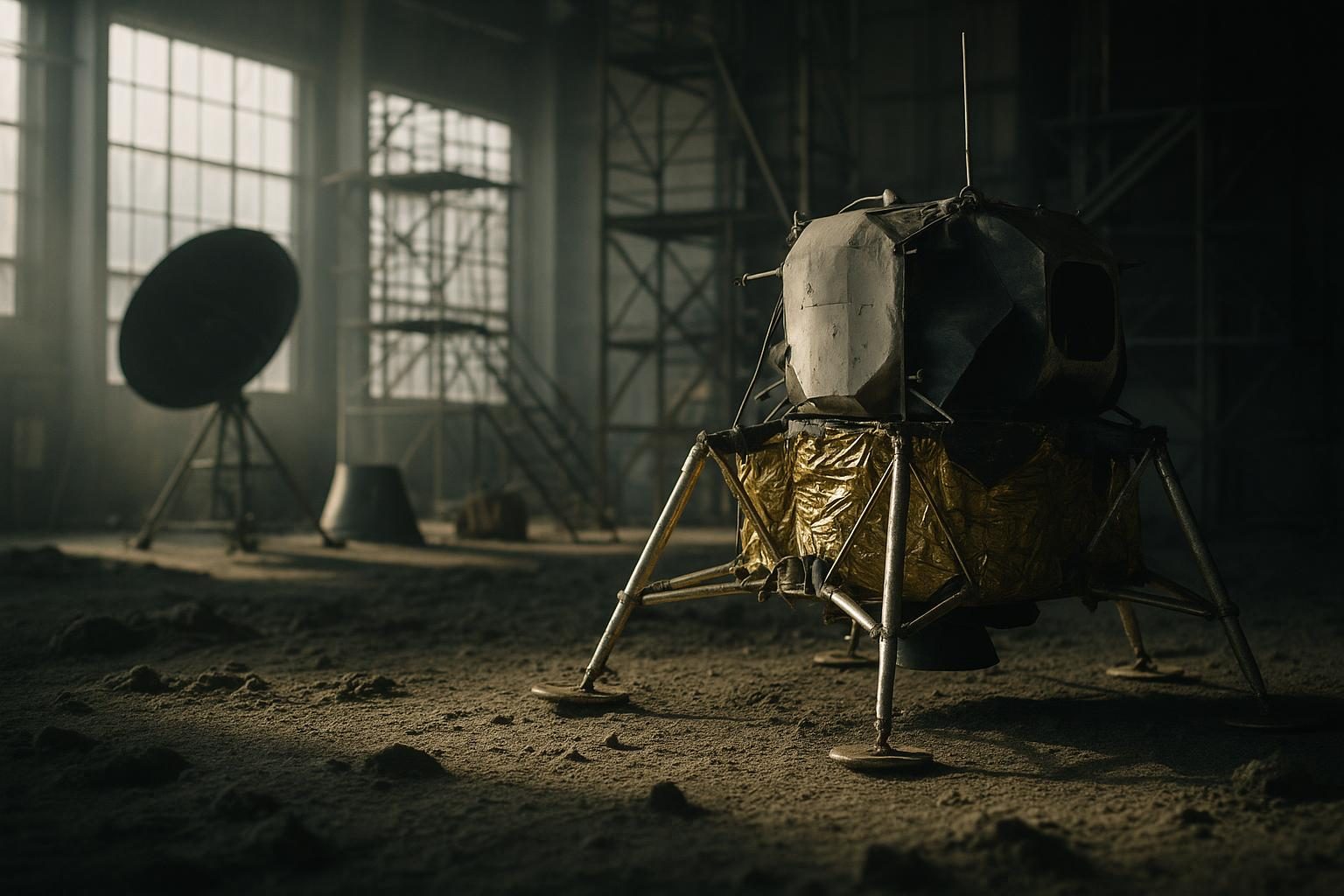
Lunar exploration has entered a critical phase, marked by a development that could redefine our relationship with the Moon. Firefly Aerospace and Zeno Power Systems, through NASA’s Commercial Lunar Payload Services (CLPS), have announced a mission to deliver the Survive-the-Night Package, a radioisotope heating unit, on a Blue Ghost mission by 2028. As the space race accelerates, the significance of this mission extends beyond mere survival; it is about thriving in adversity and setting the stage for permanent lunar infrastructure.
Blazing New Trails: The Blue Ghost Mission
Firefly Aerospace and Zeno Power Systems have signed a commercial payload agreement to carry a five-watt americium-241 radioisotope heater unit (RHU) as part of the Blue Ghost mission, slated for no earlier than 2028. This technology is about ensuring the viability of long-term lunar operations. With temperatures on the Moon plunging well below -208°F during the lunar night, survival requires innovation. The RHU will deliver continuous thermal energy, keeping critical systems functional in cold that would otherwise spell ruin.
Zeno Power Systems' equipment includes the RHU and a suite of supportive technologies, ensuring a seamless operation through the lunar night. These additions, including structural, communications, electrical power, command and data handling, and thermal management systems, play a central role in this ambitious endeavor. It demonstrates a commitment to thriving in the unforgiving lunar environment.
The Financial and Strategic Impetus
This mission fits within the broader narrative of lunar exploration as a frontier for commercial and scientific opportunity. Firefly Aerospace noted that the collaboration aligns with NASA’s CLPS initiative and advances America’s space ambitions. By pioneering means for uninterrupted operation in the harsh lunar night, the RHU optimizes conditions for both robotic and human missions.
Moreover, the endeavor highlights a strategic pivot in the space industry towards sustainable lunar infrastructure. This pivot could potentially unlock new markets, innovation in technology, and considerable economic opportunities. The OECD Nuclear Energy Agency’s Small Modular Reactor Dashboard highlights how such advancements reflect a broader trend in leveraging nuclear technology for innovative applications beyond Earth.
A Step Toward Lunar Independence
The ramifications of successfully using a radioisotope heater on the Moon are vast. Surviving the lunar night is crucial for creating self-sustaining lunar habitats, essential for future Moon Base initiatives. Such technology promises to bolster U.S. leadership in space exploration, as development of these systems becomes key to realizing the full potential of lunar missions.
Zeno Power's ongoing efforts to build production capacity highlight a vision beyond this single mission. By scaling up technology for future commercial and governmental missions, they are setting a framework that transforms the Moon from a distant goal into an active workspace. This strategy could bring about a thriving commercial ecosystem with abundant resources, ripe for scientific discovery and technological experimentation.
Redefining Frontiers and Expectations
Firefly Aerospace's first Blue Ghost mission already gathered critical data on thermal extremes, prompting these advancements. By bridging the gap between day and night operations on the lunar surface, it sets a precedent for future explorations, ensuring missions are viable and sustainable in the long term.
As this mission unfolds, it invites us to reconsider the untapped potential of lunar real estate. The journey is no longer solely about exploration but about habitation and utilization. These payloads create a scenario where regulatory, economic, and scientific lines blur, ushering in an era of joint commercial and exploratory lunar projects.
The Firefly and Zeno collaboration signifies a key milestone, reflecting a growing recognition of space as a resource-rich territory. While climate and geographical factors have historically limited lunar operations, the capability to survive the lunar night addresses these constraints directly.
Innovation may begin on Earth, but the real test is on the Moon. Partnerships like that of Firefly and Zeno illustrate the intricate dance of strategy, technology, and exploration, an endeavor that captures the cold keen edge of survival and promises a warmer, more vibrant lunar future.
What to Watch Next
What changed: The announcement of the Survive-the-Night Package marks a shift towards sustainable lunar operations.
Measurable implication: The deployment of the five-watt americium-241 radioisotope heater unit aims to maintain critical systems during the lunar night.
Next dated milestone: No dated milestone is scheduled; the signal to watch is the progress of the Blue Ghost mission preparations.
Strongest counterargument: The success of this mission depends on technological reliability. Any failure in the RHU or supportive systems could delay or derail the mission's objectives. A successful test of these technologies in a simulated lunar environment would strengthen confidence.
Sources
- Blue Ghost to carry nuclear power source to the Moon — World Nuclear News · 21 August 2026
- Firefly Aerospace Onboards Zeno Power on Blue Ghost Mission to Demonstrate Radioisotope Technologies to Survive the Lunar Night — fireflyspace.com · date not available
- The NEA Small Modular Reactor Dashboard: Third Edition — oecd-nea.org · date not available
MktInvest Research is MktInvest's automated research desk. Every piece is AI-generated and machine-gated — no human byline is implied. How this works →
Get this in your inbox, weekly
The Friday digest: what changed on every market we track — stances, evidence movement and the facts behind it.
Marketing communication for informational purposes. It does not constitute financial advice or a personalised recommendation (MiFID II). Exposures are discussed at asset-class/ETF level only.