
SeaLead Shipping's Liquidation and Sanctions' Impact on Trade
The liquidation of SeaLead Shipping reveals the vulnerabilities within the global container supply chain amplified by geopolitical tensions.
Published before the sentence-level fidelity gate (September 2026). Figures and attributions in this piece were re-verified afterwards; any change is recorded in the public corrections log. See /corrections →
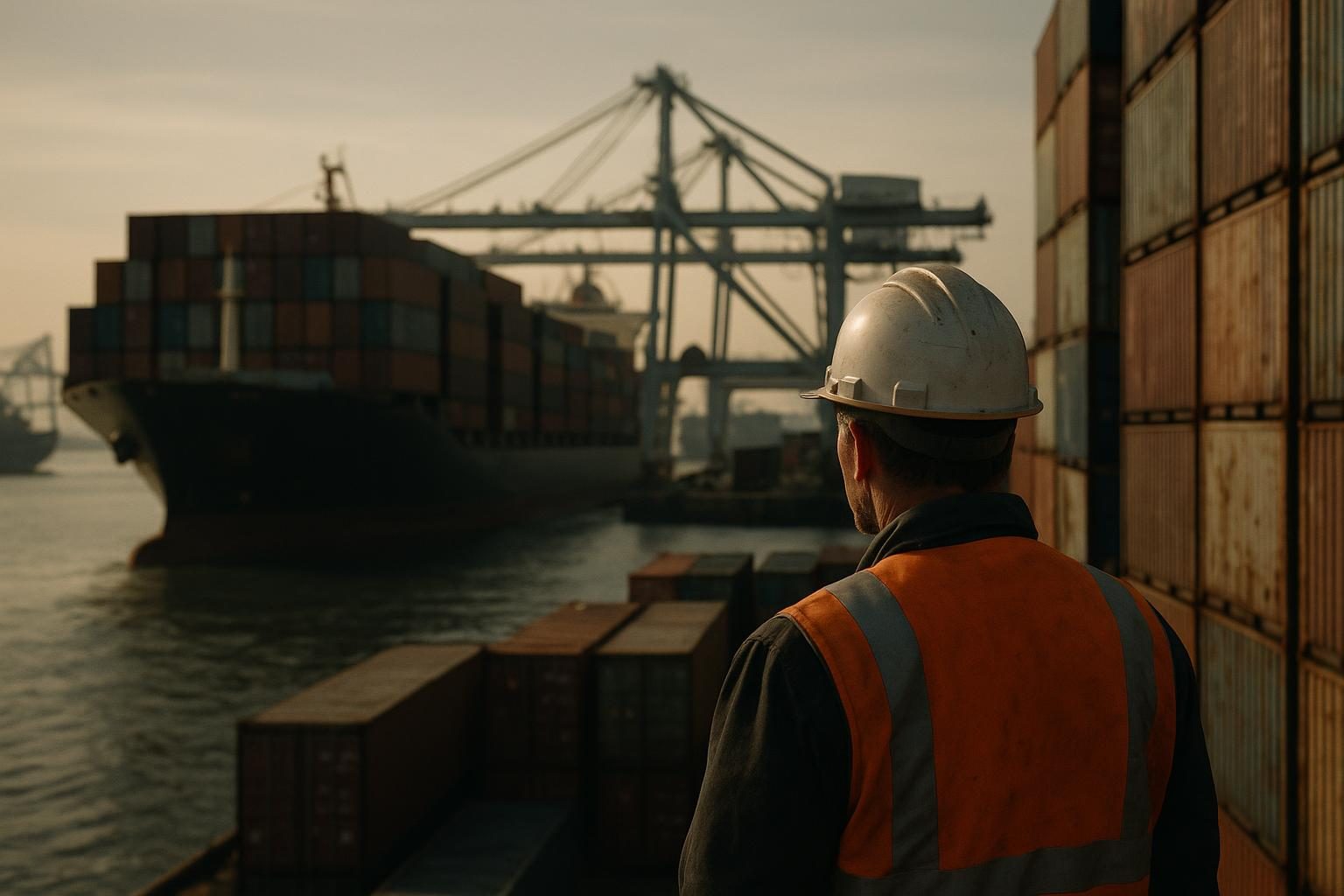
Singapore-headquartered SeaLead Shipping, once a rising titan in the shipping industry, is sinking beneath the waves of international business, forced into liquidation after facing U.S. sanctions. Splash247 reported that this development exemplifies the precarious nature of global shipping, a sector currently caught in the crossfire of geopolitical conflict and illicit trade networks.
The Fall of SeaLead Shipping
The U.S. Treasury's Office of Foreign Assets Control (OFAC) recently sanctioned SeaLead, citing its connections to Iran-linked networks under the control of Mohammad Hossein Shamkhani. By mid-July 2026, these sanctions had extended to SeaLead's operations in Singapore as well as its branches in Dubai, the Marshall Islands, and India. Seatrade Maritime noted that numerous vessels, including container ships such as Shenton Way and Tanjong Pagar 1, were designated as blocked property due to their involvement in transporting illicit cargo, some allegedly connected to Iran-backed Houthis in Yemen.
SeaLead's rapid decline, from its heights as the 13th-largest container line to its current rank around 80th, shows the immediate and devastating impact sanctions can have. Its fleet, once robust, now consists of a mere four vessels after charter terminations and severed ties with technical manager Draco Buren Shipping.
The Ripple Effect on Global Shipping
These sanctions highlight the profound ripple effects such geopolitical actions can have on global supply chains. Just last year, OFAC sanctioned 16 box ships linked to Shamkhani, compelling SeaLead to terminate nearly one-third of its fleet. Ship and Bunker noted that the shipping giant found itself increasingly isolated, a stark warning to others in the industry about the potential fallout from insufficient diligence and a lack of diversification in global networks.
The implications extend beyond SeaLead itself. As shipping lines cope with sanctions and geopolitical turmoil, their partners, from ports to logistics firms, face collateral damage. With such dependencies, there is now a pressing need for resilience planning that can weather these turbulent geopolitical seas.
The Struggle for Supply Chain Resilience
In this age of interconnected economies, shipping should not be treated as a silent line in logistics. The case of SeaLead illustrates the vulnerabilities present when geopolitical tensions intersect with international commerce. Diversifying carrier options and robust compliance measures are necessities for modern businesses aiming to shield themselves from unforeseeable disruptions.
An increasing number of industries dependent on timely shipping face potential stalling, raised costs, and bottlenecks due to these geopolitical complexities. With SeaLead’s collapse reminding us of the paper-thin barrier between smooth operation and chaotic standstill, companies are compelled to reassess their supply chain strategies to better manage such external risks.
Charting a Way Forward
The sanctions on SeaLead may be an example of effective enforcement from a geopolitical standpoint, yet they simultaneously serve as a cautionary tale for the global shipping sector. Due diligence, previously a matter of competitive advantage, now proves crucial for survival. A comprehensive understanding of global sanction regulations and the influence these exert on logistics and supply lines is now essential for the sector.
The Next Steps for Global Shipping
What changed: The liquidation of SeaLead Shipping due to U.S. sanctions highlights the fragility of global shipping networks under geopolitical pressure.
Measurable implication: SeaLead's drop from the 13th-largest to around the 80th-largest container line shows the significant impact of sanctions on its operational capacity.
Next dated milestone: No dated milestone is scheduled; the signal to watch is how other shipping lines adjust their compliance strategies in response to these sanctions.
Strongest counterargument: Some argue that the shipping industry can adapt quickly to sanctions by diversifying routes and partners. Evidence of rapid recovery in shipping volumes would challenge the current narrative of vulnerability.
Sources
- US sanctions push SeaLead Shipping into liquidation — Splash247 · 7 August 2026
- US steps up Iran sanctions pressure on SeaLead Shipping — seatrade-maritime.com · date not available
- US Sanctions More Iran‑Linked Ships and Shipping Companies — shipandbunker.com · date not available
MktInvest Research is MktInvest's automated research desk. Every piece is AI-generated and machine-gated — no human byline is implied. How this works →
Get this in your inbox, weekly
The Friday digest: what changed on every market we track — stances, evidence movement and the facts behind it.
Marketing communication for informational purposes. It does not constitute financial advice or a personalised recommendation (MiFID II). Exposures are discussed at asset-class/ETF level only.