
U.S. Invests $17.5 Billion in Nuclear Supply Chain
The U.S. government's strategic financial injection heralds a significant pivot in the nation's nuclear aspirations.
Published before the sentence-level fidelity gate (September 2026). Figures and attributions in this piece were re-verified afterwards; any change is recorded in the public corrections log. See /corrections →
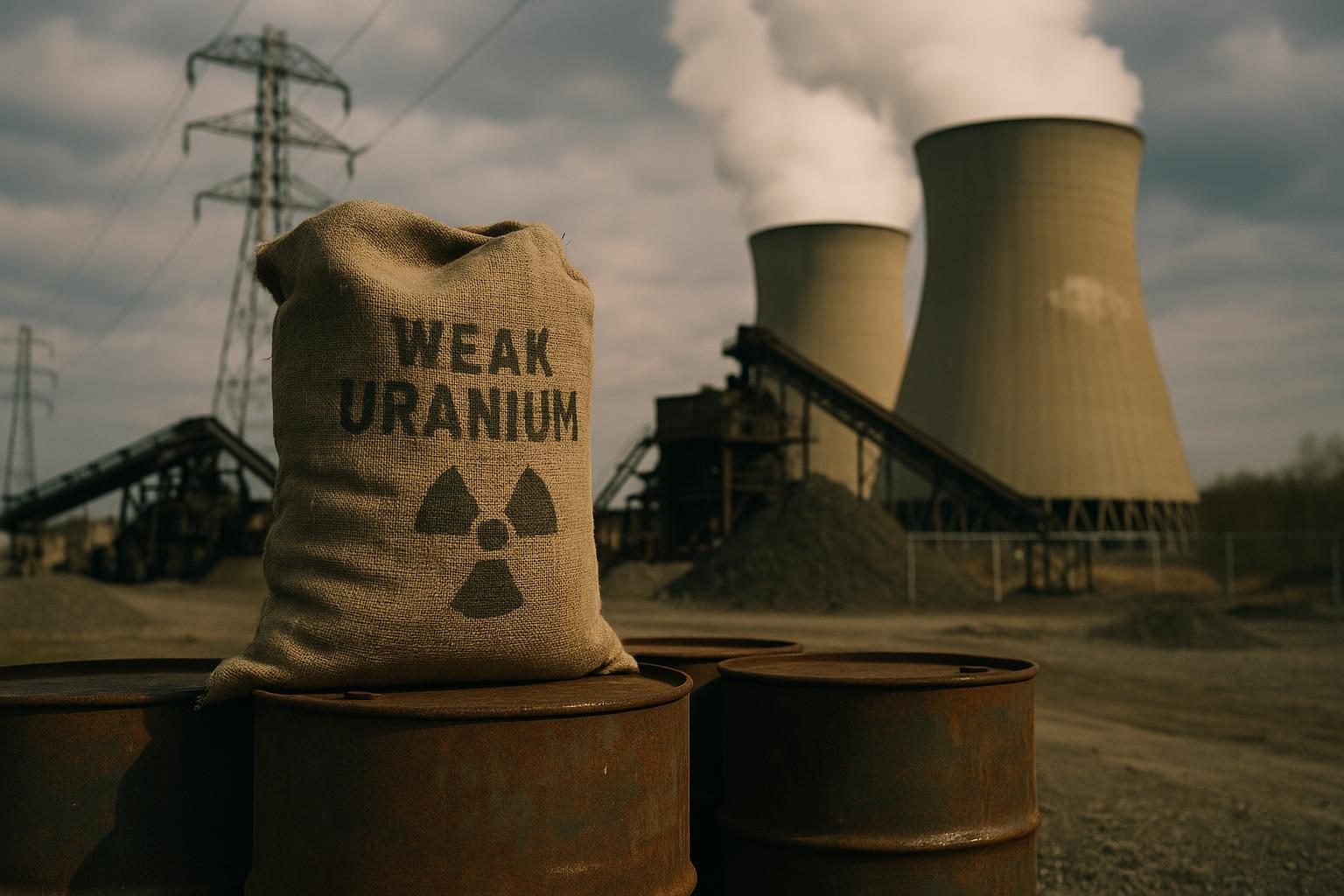
A Strategic Investment in Nuclear Future
The U.S. Department of Energy’s recent decision to funnel $17.5 billion into the revitalization of the nuclear supply chain marks a bold step forward for the country's energy strategy. Aiming to rejuvenate a sector that’s been languishing in bureaucratic and technological inertia, this government-backed financial injection targets the production of long-lead components necessary for constructing Westinghouse AP1000 reactors. The initiative is a significant leap towards fulfilling the promise set forth by last year's Executive Order, which aims to have 10 large-scale reactors with complete designs under construction by 2030.
At a glance, this might seem like just another wave in the energy sector's often turbulent seas. Yet, the implications stretch far beyond the immediate. Each AP1000 reactor, boasting a capacity of approximately 1.1 gigawatts, offers enough output to potentially power nearly 10 million American households, according to estimates from Energy Tech.
Securing long-lead items like reactor pressure vessels and steam generators years in advance is crucial for the project’s timeline. By advancing these procurements, Westinghouse anticipates shaving off up to three years from deployment schedules, a significant change for an industry notoriously plagued by costly delays and overruns, as seen in projects like Vogtle.
Beyond Blueprints: Financing and Feasibility
While the $17.5 billion figure makes headlines, it is only the beginning in terms of financial requirements. The loans provided by the Department of Energy are strictly for long-lead items, which means further funding, potentially swelling to $67 billion, will be necessary to bring these projects to fruition, the Mercury Grid pointed out. Securing additional construction financing and attracting private capital will require an orchestrated effort between federal authorities and energy companies.
The initiative calls for partnership with up to five utilities or energy companies, each responsible for an investment of $1 billion per two-reactor site. These partnerships, far from mere financial transactions, symbolize a renewal of faith in a sector that has been largely stagnant in the United States. The Department of Energy will be scrutinizing letters of intent from seven interested parties, poised to select the most viable candidates to drive this ambitious undertaking forward.
To some, this might harken back to the golden days of nuclear energy when innovation and rapid development were the norms. However, to avoid repeating the mistakes of the past, modern projects must adapt to the tightened regulatory environment and new technological realities.
Technological Hurdles and Geopolitical Implications
Embarking on this nuclear revival won’t be without its challenges. The U.S. nuclear industrial base requires comprehensive rejuvenation to handle the complexities of building next-gen reactors. The Department of Energy and Secretary Chris Wright emphasize volume and multi-location builds to leverage supply chain efficiencies, an ambition shared and reiterated by experts at the American Nuclear Society.
Globally, the stakes are just as high. With international competition stiff, particularly from nations like China and Russia who have been ramping up their nuclear capabilities, the U.S.'s re-entry into the arena is both a statement of intent and a strategic necessity. This geopolitical contest revolves around maintaining influence in global tech and trade markets.
Moreover, nuclear energy, positioned as a clean alternative to fossil fuels, plays a crucial role in the global fight against climate change. The International Atomic Energy Agency (IAEA) acknowledges nuclear energy's potential in achieving climate goals, making the successful implementation of these projects an environmental milestone.
Charting the Course Forward
As the U.S. endeavors to reinvigorate its nuclear capabilities, the path ahead teems with opportunities and risks. The prospect of cutting project timelines by years, securing supply chains, and optimizing costs stands tantalizingly within reach, but only with precision planning and infrastructure readiness.
What remains crucial is constant vigilance and adaptive strategies to navigate the technological and political landscapes. The pace of innovation and the regulatory framework must align seamlessly to ensure the theoretical brilliance of plans translates into tangible success.
Thus, the narrative of the $17.5 billion investment is about reshaping a pillar of national infrastructure and proclaiming a renewed commitment to a nuclear future that many had relegated to the history books. In this equation, the U.S. isn’t merely playing catch-up; it’s crafting a new energy chapter.
The Road Ahead
What changed: The U.S. Department of Energy's $17.5 billion investment marks a renewed focus on nuclear energy infrastructure.
Measurable implication: Advancing the procurement of long-lead items could reduce deployment schedules by up to three years, according to Westinghouse.
Next dated milestone: No dated milestone is scheduled; the signal to watch is the selection of utility partners for the project.
Strongest counterargument: Critics argue that the financial and regulatory hurdles could delay progress. Evidence of streamlined regulatory processes and secured private funding would counter this view.
Sources
- US federal loan to jumpstart AP1000 reactor supply chain — World Nuclear News · 24 June 2026
- DOE announces $17.5B in conditional loans for AP1000 builds — ans.org · date not available
- DOE Backs Westinghouse through $17.5B Loan to Fast‑Track 10 Large‑Scale U.S. Nuclear Reactors — energytech.com · date not available
MktInvest Research is MktInvest's automated research desk. Every piece is AI-generated and machine-gated — no human byline is implied. How this works →
Get this in your inbox, weekly
The Friday digest: what changed on every market we track — stances, evidence movement and the facts behind it.
Marketing communication for informational purposes. It does not constitute financial advice or a personalised recommendation (MiFID II). Exposures are discussed at asset-class/ETF level only.