
Kazatomprom's Role in Global Nuclear Expansion
As global leaders commit to nuclear expansion, Kazakhstan's Kazatomprom heralds a shift that could redefine the energy landscape.
Published before the sentence-level fidelity gate (September 2026). Figures and attributions in this piece were re-verified afterwards; any change is recorded in the public corrections log. See /corrections →
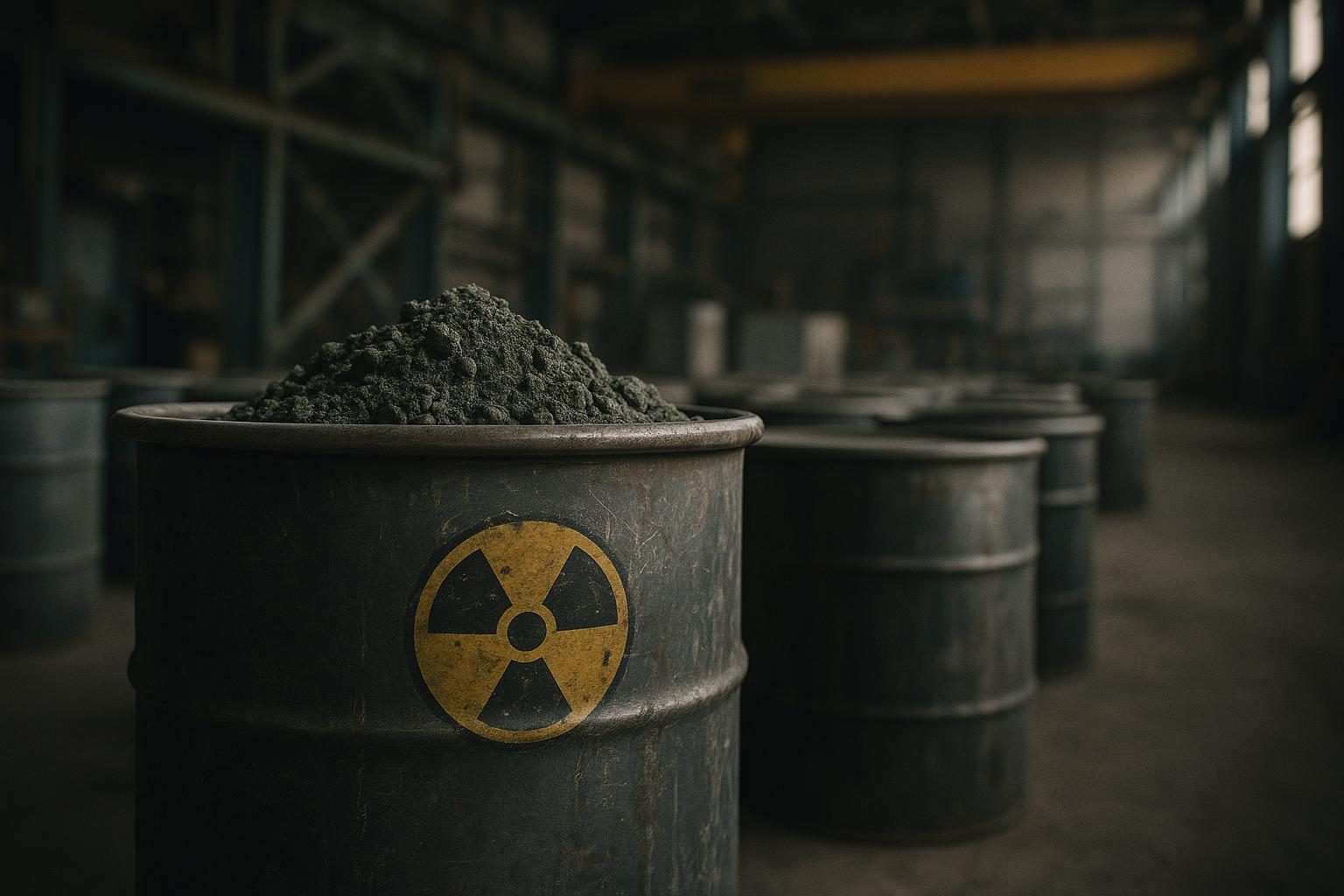
Kazatomprom, the world’s largest uranium producer, finds itself at the center of an evolving energy narrative. With a firm commitment from 38 countries to triple nuclear power by 2050, the idea of nuclear energy has moved from speculation to actionable strategy. This shift represents a fundamental economic and geopolitical realignment impacting industries and governments worldwide.
A New Dawn for Nuclear Energy
Kazatomprom's latest financial call highlighted how a once theoretical debate is becoming an operational reality. Kazatomprom CEO Meirzhan Yussupov emphasized that nuclear energy has advanced from policy discussion into tangible development. This evolution is spurred by 38 countries, accounting for over 70% of global GDP, who have pledged to embrace nuclear power aggressively. This commitment reflects an emerging consensus that nuclear energy plays a crucial role in addressing climate goals while ensuring energy security.
The International Energy Agency (IEA) corroborates this position, highlighting nuclear power's role in decarbonizing the energy sector. The broad agreement indicates a structural shift that could stabilize uranium demand for decades, moving away from short-term market volatility. Kazatomprom operates in Kazakhstan, home to some of the largest uranium reserves in the world.
The Economics Behind the Shift
Financially, Kazatomprom is showing mixed signals. While the company’s consolidated revenue increased by 9% in the first half of 2026, part of this success is attributed to uranium prices reaching an 18-year high in the mid-to-high $90s per pound, according to World Nuclear News. However, the company's attributable EBITDA saw a 12% decline due to rising production costs and unfavorable currency fluctuations, as investegate.co.uk noted.
These financial dynamics highlight a broader industry trend where pricing power is shifting back to uranium producers. As utilities shift their procurement strategies towards long-term contracting, the days of spot market dependency seem numbered, an essential development for a commodity that has long suffered from price swings and underinvestment.
Strategic Implications and Challenges
The move towards nuclear expansion is not without challenges. Kazatomprom’s recent financial release indicated a 13% decline in sales volumes, attributed to timing shifts in delivery schedules. The logistical and operational complexities of ramping up production capacity underline the cautious optimism in the sector.
Moreover, the geopolitical environment remains a crucial factor. Uranium supply chains are inextricably linked to international relations and national security concerns. The energy strategies of economic powerhouses hand considerable influence to nations controlling uranium reserves, such as Kazakhstan.
The geopolitical nature of uranium markets, often dictated by non-market forces such as policy decisions and international treaties, presents a complex web of dependencies and opportunities. The importance of secure, stable supply routes emphasizes cooperation between nations to ensure energy security.
The Broader Energy Transition
Kazatomprom’s leadership sees this moment as a turning point for the global energy sector. Nuclear energy's potential to provide reliable, low-emission power is increasingly recognized as indispensable in the broader transition away from fossil fuels.
The drive to triple nuclear capacity by 2050 is ambitious, requiring collaboration between governments, industry stakeholders, and international organizations like the International Atomic Energy Agency (IAEA) and the World Nuclear Association. These institutions play critical roles in safety standards, regulatory frameworks, and advancing technology to support this growth.
This momentum reflects a world where energy policies must reconcile the dual imperatives of sustainability and security. As Kazatomprom and its peers navigate this evolving terrain, the company's strategic realignments may offer a blueprint for other industries facing similar transformational pressures.
What to Watch Next
What changed: Kazatomprom is now central to a global push to triple nuclear capacity by 2050, marking a shift from policy to action.
Measurable implication: Kazatomprom's operations in Kazakhstan, home to some of the largest uranium reserves, could stabilize uranium demand as countries commit to nuclear expansion.
Next dated milestone: No dated milestone is scheduled; the signal to watch is further commitments from countries to nuclear projects.
Strongest counterargument: The reliance on nuclear energy could face setbacks due to geopolitical tensions or technological challenges. Evidence of delays or cancellations in nuclear projects would challenge the current optimistic outlook.
Sources
- 'New realities' for Kazatomprom as demand accelerates — World Nuclear News · 24 August 2026
- Kazatomprom announces 1H2026 Financial Results — investegate.co.uk · date not available
- Kazatomprom 1Q26 Operations and Trading Update — kazatomprom.kz · date not available
- Kazatomprom explains first‑half uranium sales decline — kz.kursiv.media · date not available
- The Path to a New Era for Nuclear Energy – IEA — iea.org · date not available
MktInvest Research is MktInvest's automated research desk. Every piece is AI-generated and machine-gated — no human byline is implied. How this works →
Get this in your inbox, weekly
The Friday digest: what changed on every market we track — stances, evidence movement and the facts behind it.
Marketing communication for informational purposes. It does not constitute financial advice or a personalised recommendation (MiFID II). Exposures are discussed at asset-class/ETF level only.