
Iraq Plans to Double Oil Production Amid OPEC Tensions
Iraq aims to double its oil output, challenging OPEC's constraints and reshaping energy geopolitics.
Published before the sentence-level fidelity gate (September 2026). Figures and attributions in this piece were re-verified afterwards; any change is recorded in the public corrections log. See /corrections →
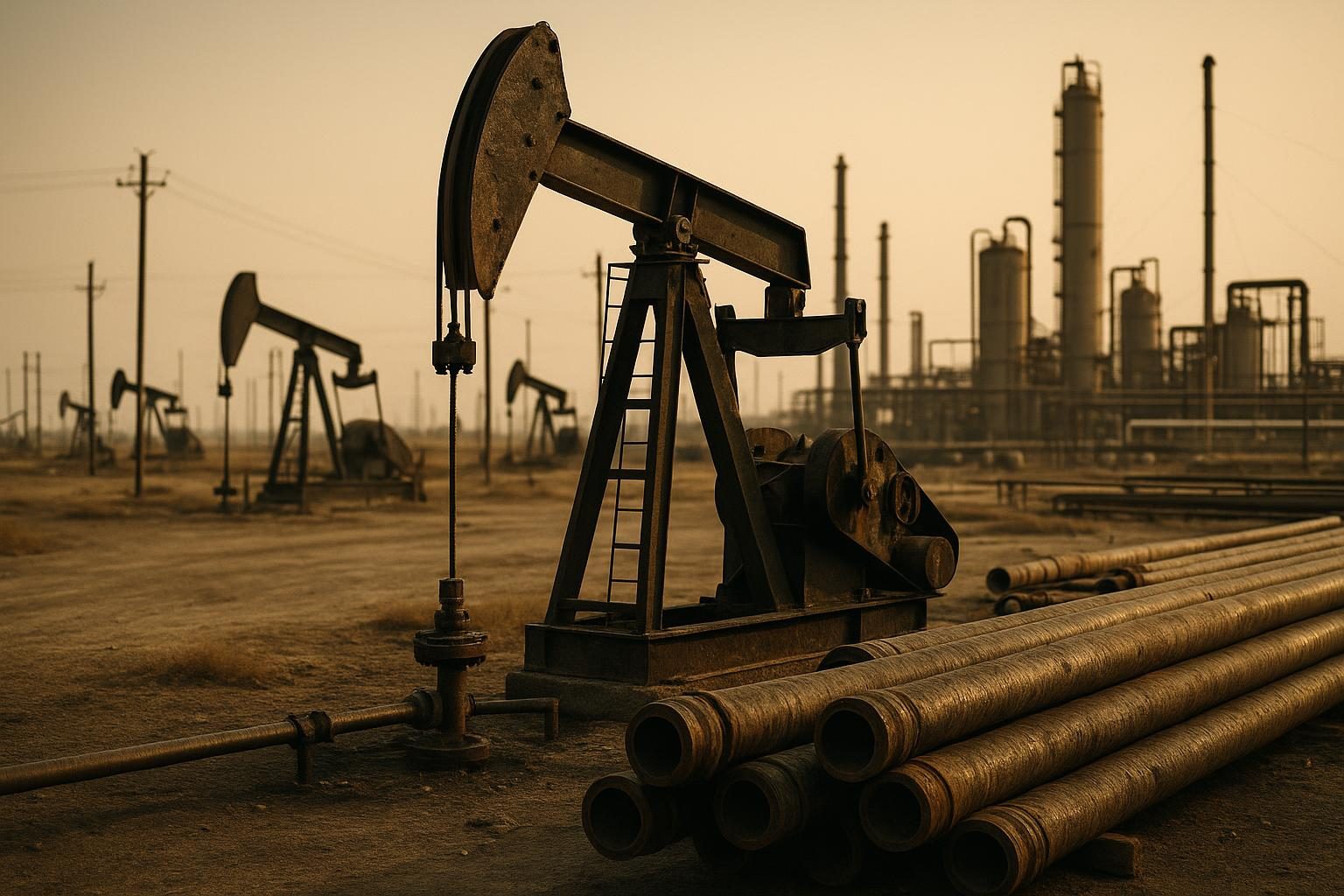
Looming over the heat of Baghdad sits a new vision: Iraq's aspiration to double its oil production to a staggering 8-10 million barrels per day. This bold undertaking by Prime Minister Ali al-Zaidi is more than a numerical ambition, it’s a gauntlet dropped at the feet of OPEC. As one of the cartel’s founding members, Iraq’s drive to boost output sets it on a collision course with OPEC's managed production system, hinting at structural shifts in global energy alliances.
Iraq's Strategic Calculus
As the oil market holds its breath, it's clear that Iraq's gambit extends beyond petroleum arithmetic. The country, recovering from prolonged conflict, sees oil as a ticket to economic resurgence. Baghdad's plan, disclosed on August 21, 2026, aims to surpass its pre-war output levels and cement its position as a dominant producer. Yet, current flows remain shackled at around 2 million barrels per day, hindered by the Strait of Hormuz closure, a crucial bottleneck that disrupts Iraq’s export arteries.
OPEC’s response will be central. For Iraq, it’s not simply about numbers but reclaiming economic agency. Iraq sent high-ranking officials to Saudi Arabia to advocate for a revised production quota. This isn't just a negotiation; it's a plea for recognition of Iraq's potential and a call for flexibility in OPEC policies that have, for decades, shaped market dynamics.
OPEC's Quota Quandary
OPEC's system of production quotas has been its hallmark, designed to balance supply with global demand. However, this framework is facing unprecedented challenges. DeGolyer and MacNaughton have been tasked with assessing the sustainable production capacities of OPEC members, with Iraq's aspirations at the heart of this analysis. The results, due by the end of September, are highly anticipated, setting the stage for 2027 quota negotiations.
Iraq’s case reflects a broader trend of producer nations asserting more autonomy. The United Arab Emirates' recent departure from OPEC highlights this shift. For Iraq, the stakes are high. An exit from OPEC, should quotas remain unchanged, could realign its partnerships, possibly sidling closer to energy-hungry allies like China, already increasing its intake of Iraqi Basrah crude.
Beyond the Strait: Expanding Export Horizons
The Strait of Hormuz remains a geopolitical tinderbox, with choke points that can crimp Iraq's export capabilities. To mitigate these risks, Iraq is looking North and West, towards Turkey's Ceyhan port and to potential pipelines through Syria and Jordan. However, these projects are neither swift nor cheap. The Syrian route, in particular, demands at least four years and a hefty $15 billion investment.
Even so, the strategic diversification of export routes is essential for Iraq. It’s not just about logistics, but about geopolitical dexterity. By expanding its reach, Iraq intends to bypass current snags and secure a more reliable path for its oil, crucial for meeting its ambitious output goals.
A Global Ripple: Markets and Diplomacy
Iraq's ambition is more than a national narrative; it reverberates through global energy markets and diplomacy. As OPEC grapples with internal dynamics, external forces are also at play. A stronger dollar, partially driven by elevated real rates, exerts pressure on dollar-denominated commodities like oil, complicating production goals worldwide.
The situation is rife with a recalibration of energy politics. Iraq's potential departure or increased autonomy within this realm could redefine alliances. OPEC, which has operated with a delicate balance of power among its members, faces the prospect of evolving into a looser coalition or risking obsolescence.
The Road Ahead
What changed: Iraq's announcement to double its oil production challenges OPEC's existing quota system and signals a potential shift in global energy dynamics.
Measurable implication: Iraq's plan to increase production to 8-10 million barrels per day could challenge OPEC's quota system and affect global energy alliances.
Next dated milestone: No dated milestone is scheduled; the signal to watch is the outcome of the September assessment by DeGolyer and MacNaughton, which will influence 2027 quota negotiations.
Strongest counterargument: The feasibility of Iraq's plans is questionable due to geopolitical tensions and infrastructural challenges. If the Strait of Hormuz remains closed and alternative routes prove too costly or slow to develop, Iraq's ambitions may falter.
Sources
- Iraq Wants to Double Oil Output—and Needs OPEC to Get Out of the Way — OilPrice.com · 21 August 2026
- Iraq Wants to Double Oil Output—and Needs OPEC to Get Out of the Way — oilprice.com · date not available
- Iraq PM seeks oil production rise to 10m barrels a day — arabnews.com · date not available
MktInvest Research is MktInvest's automated research desk. Every piece is AI-generated and machine-gated — no human byline is implied. How this works →
Get this in your inbox, weekly
The Friday digest: what changed on every market we track — stances, evidence movement and the facts behind it.
Marketing communication for informational purposes. It does not constitute financial advice or a personalised recommendation (MiFID II). Exposures are discussed at asset-class/ETF level only.