
Fusion Energy Faces Regulatory and Financial Hurdles
As fusion inches towards commercialization by the mid-2030s, its journey is far from pure science; it’s about forging a framework learned from decades of fission’s experiences.
Published before the sentence-level fidelity gate (September 2026). Figures and attributions in this piece were re-verified afterwards; any change is recorded in the public corrections log. See /corrections →
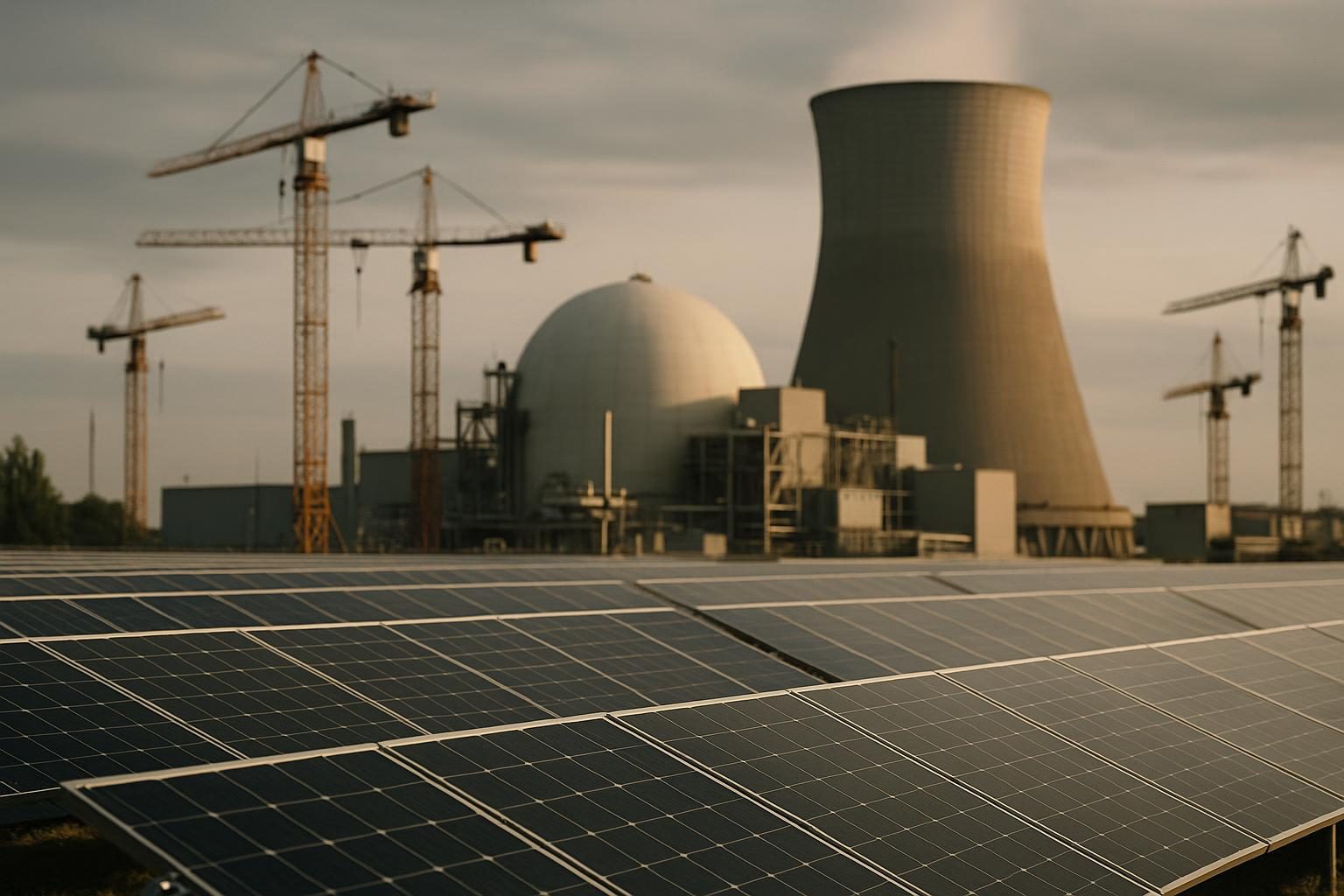
The dream of harnessing fusion energy, long the domain of science fiction, edges closer to reality, with commercial plants potentially opening in the mid-2030s. But translating scientific breakthrough into sustainable industry is not just a matter of technical prowess. Fusion's path must navigate a slew of economic, regulatory, and social challenges reminiscent of those faced by nuclear fission. Successful commercialization will depend on leveraging a foundation built on fission’s triumphs and troubles.
The Regulatory Frontier
The gap between breakthrough and the actual glow of a lightbulb powered by fusion delays the fulfillment of its promise. As the UK readies itself for fusion’s debut, it is spearheading efforts to devise a tailored regulatory regime. Gov.uk reports that the UK plans to classify fusion as a Nationally Significant Infrastructure Project under its draft National Policy Statement (EN-8). This classification distinguishes it from fission, promising clearer, swifter regulatory paths.
Across the Atlantic, the U.S. is following suit with a simplifying detachment of fusion regulation from its fission counterpart. Axios reported that the Nuclear Regulatory Commission is finalizing a framework aimed at expediting the regulatory process for fusion projects. Such initiatives are imperative; a labyrinthine regulatory pathway could stagnate the industry before its first spark.
Financing the Future
A substantial barrier to fusion’s ascent is financial infrastructure. Unlike the traditional energy sectors, fusion still lacks a tested commercial track record to entice conventional investors. The British government, as outlined by World Nuclear News, is looking to unlock public finance channels through institutions like the British Business Bank and the National Wealth Fund, ensuring that financial barriers don’t extinguish the fusion flame before it burns brightly.
Similarly, the U.S. Department of Energy is fostering public-private partnerships under a fusion roadmap to galvanize investment and innovation in the sector. This collaboration could mitigate the financial risks inherent in pioneering technology, encouraging private sector entities to venture boldly alongside public financing.
Public Reception: Winning Hearts and Minds
Fusion, while technologically divergent from fission, faces similar public perception challenges. Skepticism, borne out of decades of fission debates, casts a shadow over public acceptance of new nuclear technologies. The UK's strategy is addressing these attitudes directly by advocating for public and regional incentives as part of its commercialization plans, as noted by Committees Parliament.
The ability to communicate fusion’s differences, such as safety, cost, and waste profile, from fission is crucial. Building public trust is akin to laying the plant's foundation; it must be solid, or the structure cannot stand.
The Supply Chain and Skill Set
Global fusion aspirations highlight another challenge, scaling supply chains and developing a skilled workforce. This need for a rapid workforce transformation cannot be understated. The U.S. Fusion Industry Association surveys underscore that companies are banking on a transformative upskilling, akin to prior energy transitions, to meet mid-2030s production goals (Every CRS Report).
As fusion-specific supply chains develop, drawing lessons from fission’s developments and missteps can provide a blueprint. Lessons from past energy transitions remind us that supply bottlenecks could impede progress if not addressed preemptively.
The Broader Energy Ecosystem
Fusion’s progression affects and is affected by the larger energy ecosystem. Its potential arrival comes at a crucial time when renewable energy continues to expand. Yet, fusion’s promise of virtually limitless clean energy positions it as a long-term contender to influence global energy markets.
The interplay with existing renewables could be symbiotic rather than competitive. As fusion develops, it must position itself as a complement to solar, wind, and other green energies, reinforcing the diversity that underpins a resilient energy future.
In essence, the roadmap to fusion’s success doesn’t just plow through scientific hurdles. It must weave through a tight-knit web of societal, regulatory, financial, and logistical threads. By observing and learning from fission's history, fusion's journey might avoid repeating the same mistakes, and instead pave the way for its triumphant ignition.
What Lies Ahead for Fusion
What changed: Fusion energy is moving closer to commercialization, with regulatory and financial frameworks being developed to support its growth.
Measurable implication: Observers can track the development of regulatory frameworks in the UK and US, as well as public-private partnerships aimed at fostering investment in fusion energy.
Next dated milestone: No dated milestone is scheduled; the signal to watch is the progress of regulatory frameworks and public-private partnerships.
Strongest counterargument: The most significant challenge remains public skepticism and the potential for regulatory delays. If public perception does not improve or if regulatory frameworks become too complex, fusion's path to commercialization could be hindered.
Sources
- Viewpoint: Fusion’s lessons from fission, as commercial deployments approach — World Nuclear News · 4 September 2026
- A new energy revolution: The UK’s plan for delivering fusion energy — gov.uk · date not available
- National Planning Policy Statement on Nuclear Fusion — committees.parliament.uk · date not available
- Fusion Energy | Department of Energy — energy.gov · date not available
- Fusion energy poised for simpler U.S. review — axios.com · date not available
- Toward Commercial Fusion Energy: Considerations for Congress — everycrsreport.com · date not available
MktInvest Research is MktInvest's automated research desk. Every piece is AI-generated and machine-gated — no human byline is implied. How this works →
Get this in your inbox, weekly
The Friday digest: what changed on every market we track — stances, evidence movement and the facts behind it.
Marketing communication for informational purposes. It does not constitute financial advice or a personalised recommendation (MiFID II). Exposures are discussed at asset-class/ETF level only.