
Fortum Seeks Swedish State Support for Nuclear Project
Fortum’s quest for state support in Sweden could mark a turning point for nuclear energy and reshape Nordic energy security.
Published before the sentence-level fidelity gate (September 2026). Figures and attributions in this piece were re-verified afterwards; any change is recorded in the public corrections log. See /corrections →
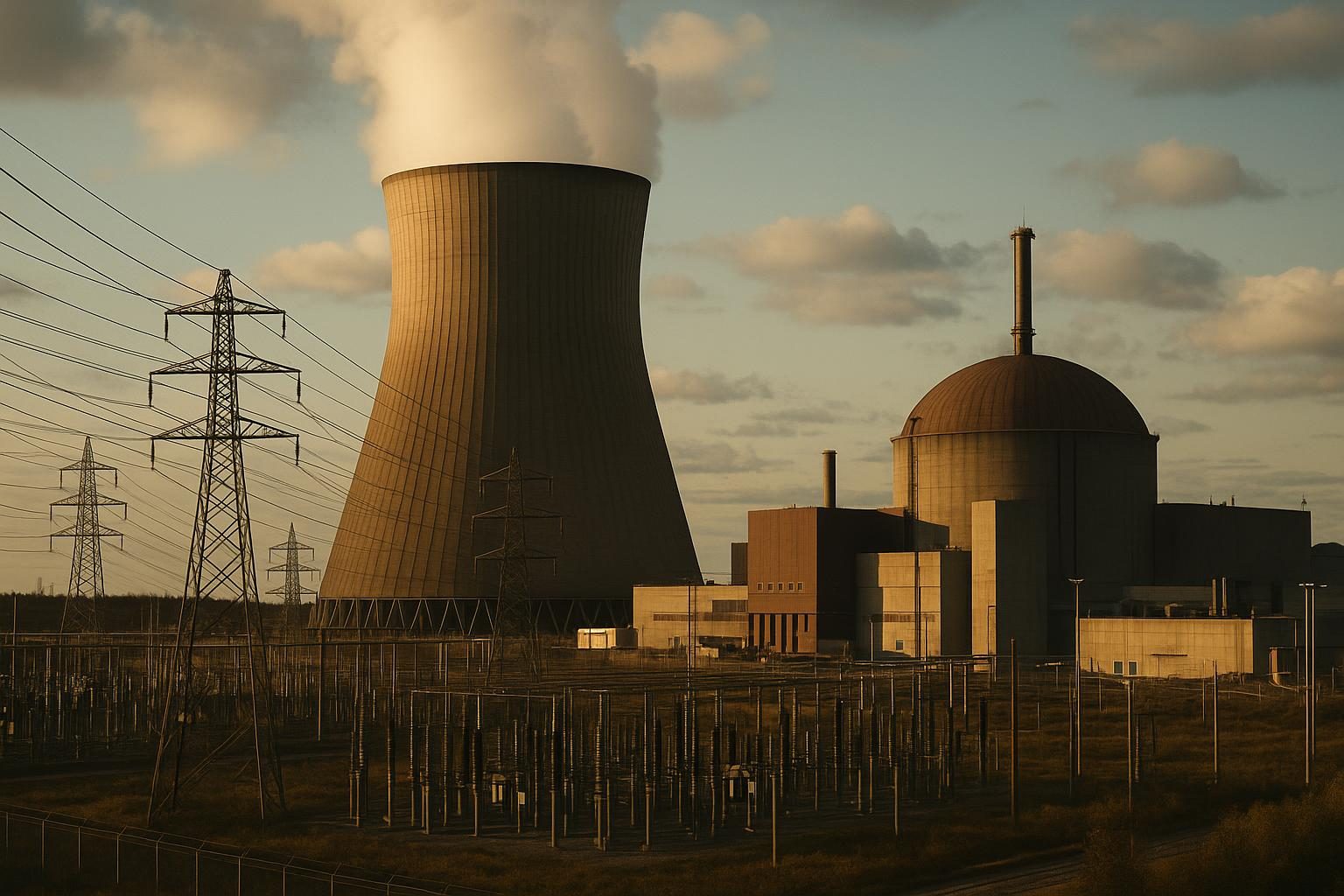
At the bustling nucleus of Northern Europe's energy scene, a quiet revolution may be taking shape. Finnish utility heavyweight Fortum, through its subsidiary NuCore Energi, has applied for Swedish state backing to kickstart a new nuclear project near the existing Oskarshamn site. This move isn't just another step in Fortum's expansion; it's a bet on the future of nuclear power as the backbone of Nordic energy security and industrial decarbonisation. The intrigue significantly widens when you consider the geopolitics, technological advances, and policy shifts interwoven with this undertaking.
Sweden's Nuclear Vision: A Decisive Shift
Sweden's energy policy now calls for a substantive nuclear renaissance. In August 2025, Sweden introduced a state aid framework offering support through loans, contracts for difference, and risk-sharing mechanisms up to 5,000 megawatts. This cap is roughly equivalent to the capacity of four large reactors, World Nuclear News reported. As Sweden positions itself to cut carbon emissions decisively, it is clear that nuclear power is once more in vogue on the political stage.
Fortum's NuCore Energi is the fifth entity vying for a slice of this nuclear opportunity. Yet, the scale and ambition of its project stand out, offering a power potential between 1,200 and 3,400 megawatts, depending on technology and investment coming through from potential partners or even the Swedish state. The project promises to strengthen the energy grid and diversify the region’s sources away from over-reliance on coal and gas. Could this set the gears turning for nuclear to dominate the renewables debate?
The Industrial Stakes: From Feasibility to Reality
Fortum's journey commenced in October 2022 with a feasibility study examining nuclear's commercial and societal viability in Finland and Sweden. Discussions roped in an array of stakeholders, technology vendors, and potential partners. Fortum chose to align with titans like EDF and Westinghouse-Hyundai, alongside SMR developer GE-Hitachi, to map a path forward. This consortium’s Early Works Agreements inked in June 2025 highlight a commitment to technical excellence and a carefully choreographed dance with Nordic nuclear safety authorities.
The implications stretch beyond energy, affecting Sweden's industrial heartlands. Reactors power homes and industries, including factories, research labs, and data centres, all demanding ever-more reliable, carbon-neutral energy. As Sweden eyes large reactors by 2035 and possibly ten by 2045, as reported by World Nuclear News, the industrial stakes are clear. A green-powered economy is a competitive economy, and Fortum’s project could serve as a catalyst for others.
The Geopolitical Undercurrents
Stepping back, Fortum’s venture reflects broader currents in global geopolitics. At its core, this project speaks to a European struggle for energy independence. With natural gas supplies under pressure, partly due to political unrest, nuclear power offers a stable alternative. Fortum's Nordic maneuvering becomes a piece of this geopolitical chessboard, a move that seeks European stability amidst the uncertainties of global energy reliance.
The project's alignment with Swedish goals mirrors a wider European pivot towards self-sufficient energy ecosystems. But, as Fortum's plans unfold, any state-backed provisions require greenlighting by the European Commission under EU state-aid regulations. This layers an additional political dimension on an already complex undertaking.
The Road Ahead: An Intersection of Opportunities and Challenges
What follow are questions of investment and integration. Fortum's intention to decrease its NuCore Energi ownership points to a strategy of pooling resources, luring private investors, and possibly state partnerships. Such financial fluidity indicates a robust approach to risk-sharing and capital raising.
Meanwhile, the queue for state funds signifies competitive heat among Sweden’s energy players. Those submitting proposals include names such as Videberg Kraft AB and Blykalla, cumulatively targeting far more capacity than the government support allows, per Fortum. This competitive backdrop could drive innovation and efficiency upgrades across projects, but also signals potential overcommitment challenges.
What Could Alter the Picture
What changed: Fortum's application for Swedish state support marks a significant step in Nordic nuclear energy expansion.
Measurable implication: Fortum's project could add between 1,200 and 3,400 megawatts to Sweden's energy capacity, depending on technology and investment.
Next dated milestone: No dated milestone is scheduled; the signal to watch is the European Commission's decision on state-aid approval.
Strongest counterargument: The strongest counterargument is the potential for regulatory hurdles at the EU level. If the European Commission delays or denies approval, it could stall Fortum's plans and affect broader nuclear ambitions in the region.
Sources
- Fortum's NuCore Energi applies for Swedish state support for new nuclear — World Nuclear News · 27 August 2026
- Fortum‑owned project company NuCore Energi AB initiates discussions on the framework for new nuclear in Sweden — fortum.com · date not available
- Regeringen tar emot ansökan om stöd till nytt kärnkraftsprojekt — regeringen.se · date not available
- Nuclear financing - Government.se — government.se · date not available
MktInvest Research is MktInvest's automated research desk. Every piece is AI-generated and machine-gated — no human byline is implied. How this works →
Get this in your inbox, weekly
The Friday digest: what changed on every market we track — stances, evidence movement and the facts behind it.
Marketing communication for informational purposes. It does not constitute financial advice or a personalised recommendation (MiFID II). Exposures are discussed at asset-class/ETF level only.