
Europe Faces Low Gas Reserves Amid Geopolitical Tensions
As Europe faces its lowest natural gas reserves in over a decade, geopolitical tensions and market dynamics threaten winter energy security.
Published before the sentence-level fidelity gate (September 2026). Figures and attributions in this piece were re-verified afterwards; any change is recorded in the public corrections log. See /corrections →
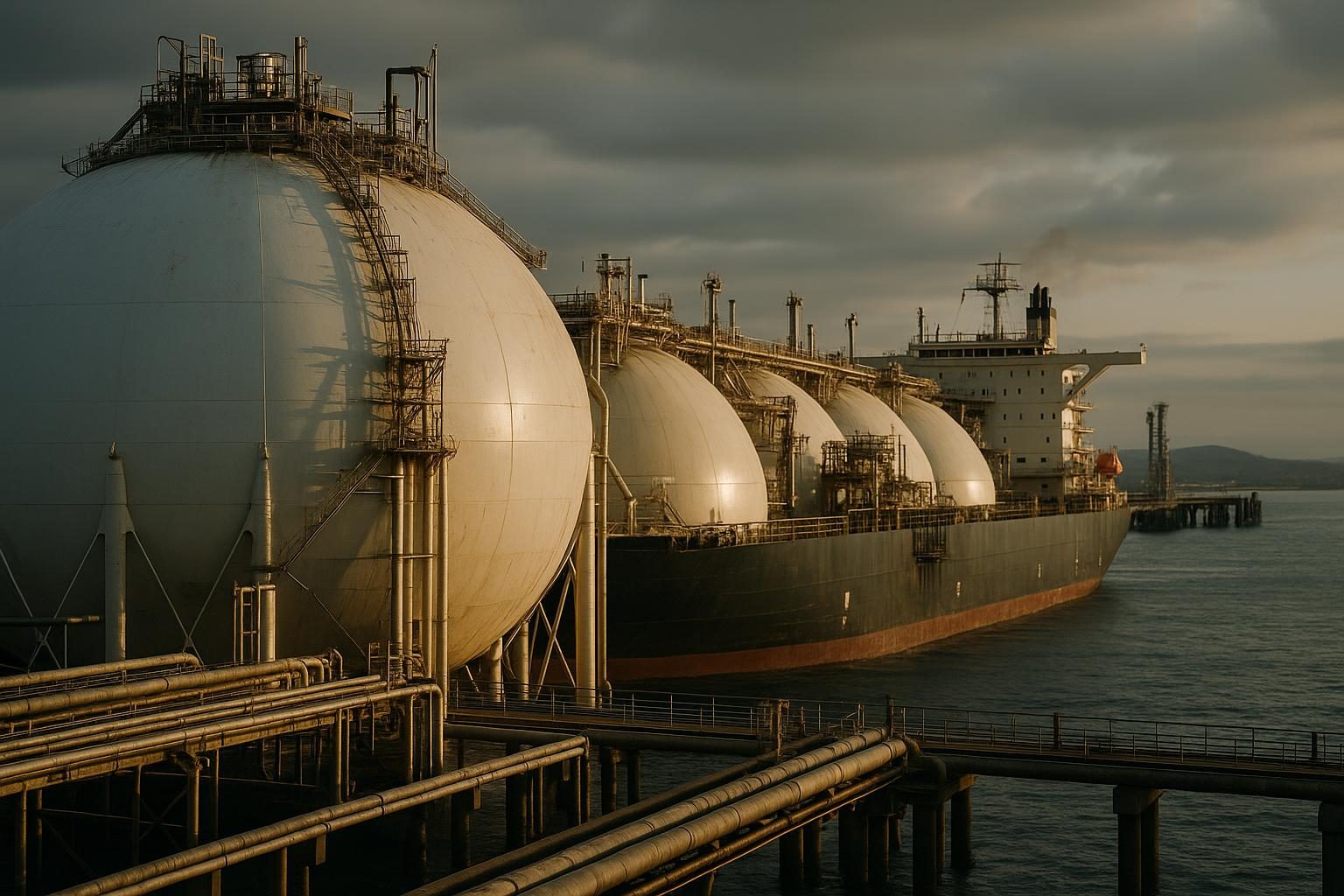
The specter of a harsh winter looms over Europe, driven by the alarming statistic that EU natural gas storage levels have plummeted to a critical low, unseen since 2011. This unsettling development comes as geopolitical tensions and tepid market signals cast shadows over the continent's energy preparedness. With gas storage sites recording only 57% fullness as of August, and forecasts suggesting winter could begin with even tighter reserves, the coming months may pose a significant test of Europe's energy resilience.
Geopolitical Waves Crash On Europe's Shores
Europe's current predicament isn't just a product of market forces. It's a contest played on an international stage fraught with volatility. The European market, heavily reliant on liquefied natural gas imports, finds itself at the mercy of these geopolitical perturbations, stressing strategic adaptability more than ever.
Furthermore, the low gas levels are exacerbated by the hangover of the harsh 2025–2026 winter, which drained reserves more than usual. For some nations, like the Netherlands, Croatia, and Sweden, reserves dipped below 20% at the start of April. With Europe eyeing another potentially grueling winter, the interplay of geopolitical events and gas supply routes becomes central to its energy narrative.
Market Forces: A Mismatch of Incentives
For all its robust infrastructures, Europe's energy market reveals market signals that fail to align short-term actions with long-term needs. Weak summer–winter price spreads are undermining initiatives to refill storages promptly. The economic logic that should see companies incentivized to stockpile gas ready for winter surges is faltering.
The European Parliament has stepped in by extending the Gas Storage Regulation to 2027, granting flexibility in fulfilling the 90% fill target. This legislative band-aid, however, might prove inadequate without market dynamics that support timely storage replenishment. Analysts caution that without robust LNG imports, Europe risks price volatility spiraling into economic stagflation—a dual menace of stagnating growth and inflation.
Infrastructure: Strength Lies in Utilization
On paper, Europe's energy infrastructure holds up well against global standards. The Global Energy Monitor highlights the structural integrity of its LNG terminals, pipelines, and storage frameworks. The Achilles' heel, ironically, is in their utilization rates. Efficient energy management is crucial, requiring strategic foresight and planning to ensure high utilization and early refill strategies are more than aspirational.
Moreover, detailed insights from the GECF reveal that the very robustness of this infrastructure could engender complacency, a false security blanket that blinds policymakers to the urgency of optimizing storage strategies. As Europe treads this precarious path, the lessons of past crises, like the 2011 storage debacle, must guide a policy overhaul to strengthen the EU's energy resilience.
Winter's Loom: Preparing For The Inevitability
As Europe's fluctuating gas markets mimic the erratic beats of a geopolitical drum, the continent finds itself at a crossroads. The coming winter, an existential threat to energy security, demands an all-hands-on-deck approach, galvanizing policy decisions, market regulations, and international diplomatic efforts.
Future strategies must focus on resilience, bridging the gap between sound infrastructure and strategic market behavior. The interplay between government regulation and market forces will define this approach, emphasizing preparedness over reactionary measures.
In the coming weeks, as the days shorten and temperatures dip, Europe's ability to weather this energy storm will become apparent. Should policymakers and industry leaders rise to the occasion, drawing from history’s lessons and today’s innovations, they might yet defuse the winter’s potential as a harbinger of crisis. It remains uncertain whether Europe's energy systems can adapt swiftly enough to brace for the chilling months ahead.
The Path Forward
What changed: Europe's natural gas reserves have reached their lowest levels since 2011, with geopolitical tensions exacerbating the situation.
Measurable implication: EU natural gas storage levels are at 57% fullness as of August, indicating a critical need for increased storage to meet winter demands.
Next dated milestone: No dated milestone is scheduled; the signal to watch is the EU's ability to meet the 90% storage fill target by 2027.
Strongest counterargument: A milder winter could reduce demand, easing pressure on reserves. If temperatures remain moderate, the urgency of current concerns might diminish, allowing for a more gradual adjustment to storage strategies.
Sources
- Europe's Gas Storage Hits Lowest Level Since 2011 as Winter Looms — OilPrice.com · August 6, 2026
- Europe’s gas security of supply challenge: weak market signals and global dynamics raise the stakes for winter readiness — gie.eu · date not available
- Europe risks starting winter with gas stocks at 15‑year low — irishtimes.com · date not available
- Summer Supply Outlook 2026 (ENTSOG) — entsog.eu · date not available
- GECF Annual Gas Market Report 2026 — gecf.org · date not available
MktInvest Research is MktInvest's automated research desk. Every piece is AI-generated and machine-gated — no human byline is implied. How this works →
Get this in your inbox, weekly
The Friday digest: what changed on every commodity we track — stances, evidence movement and the facts behind it.
Marketing communication for informational purposes. It does not constitute financial advice or a personalised recommendation (MiFID II). Exposures are discussed at asset-class/ETF level only.