
Egypt Expands Nuclear Ambitions with Rosatom Partnership
The El Dabaa Nuclear Power Plant is more than a construction project; it’s a bold statement of Egypt's future energy aspirations and regional clout.
Published before the sentence-level fidelity gate (September 2026). Figures and attributions in this piece were re-verified afterwards; any change is recorded in the public corrections log. See /corrections →
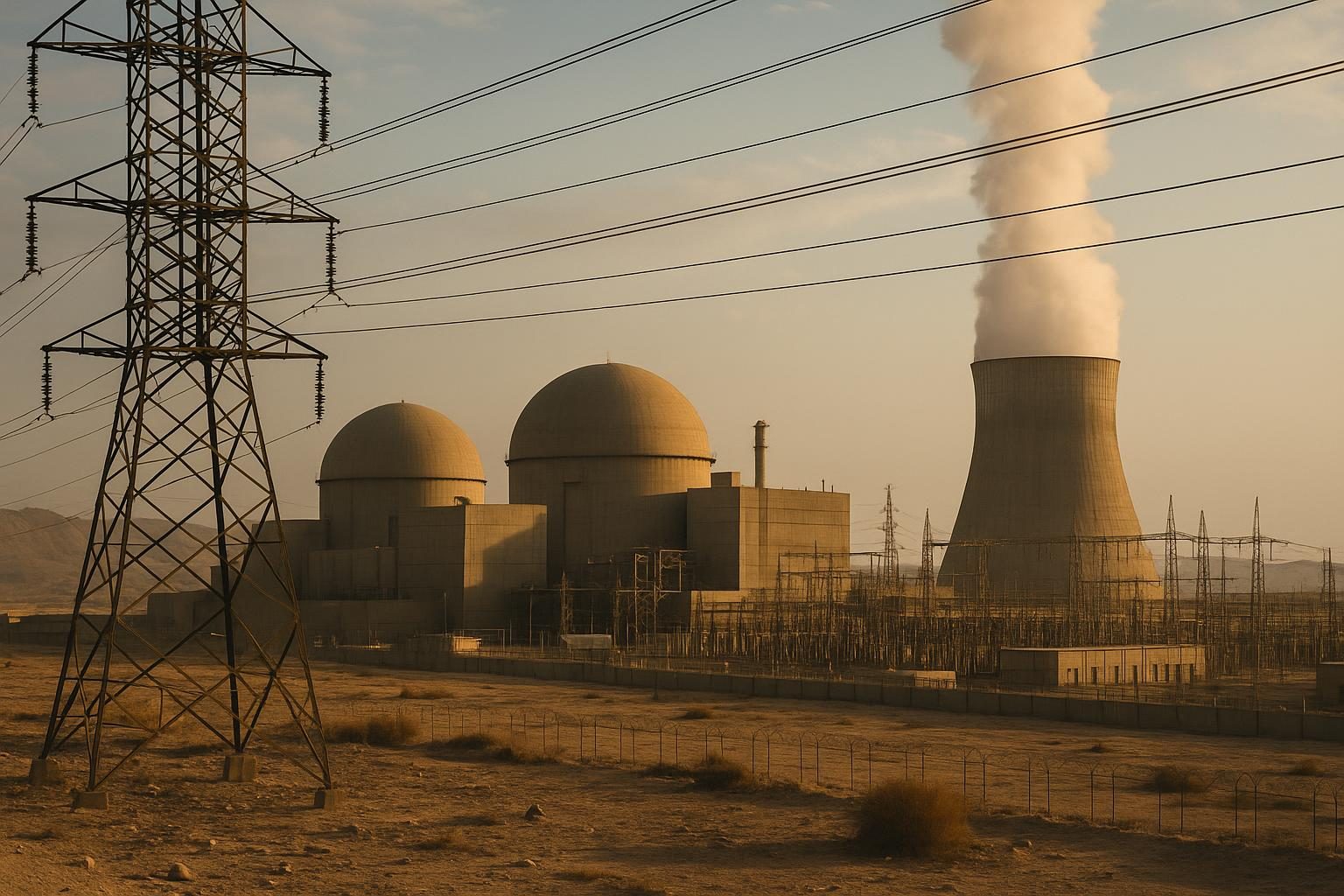
Egypt's drive towards energy autonomy reached a significant moment as its Ministry of Energy engaged in talks with Russia’s Rosatom to potentially expand the El Dabaa Nuclear Power Plant. This move marks a strategic shift in Egypt’s long-term planning for energy security and regional influence. World Nuclear News reported that Rosatom and Egypt discussed both large-scale and modular reactor options, highlighting the broader implications against a backdrop of global nuclear dynamics.
A New Dawn in Energy Strategy
The El Dabaa Nuclear Power Plant, once completed, will symbolize Egypt’s modernization. With four Generation III+ VVER-1200 reactors under construction, the plant is central to Egypt’s plan to diversify its energy sources. The first reactor is expected to come online in 2028, with the aim of generating 9% of Egypt's electricity from nuclear by 2030. This aligns with Egypt’s Vision 2030, focusing on energy diversification and decarbonization.
The project involves a significant financial commitment: a $25 billion loan from Russia, covering much of the $30 billion cost. This investment is about building reactors, technology transfer, and local workforce development, employing over 25,000 workers, mostly Egyptian nationals.
Beyond the Four Walls of El Dabaa
Egypt’s ambitions extend beyond the initial four reactors. Under President el-Sisi, the government is exploring adding two more reactors. Discussions include small modular and floating reactors, as reported by Bellona. These technologies could redefine energy strategies across Africa, where energy access is a critical issue.
Additionally, Egypt is considering high-tech centers for nuclear medicine, desalination, and advanced technology like quantum computing. The Egyptian State Information Service noted these initiatives could position Egypt as a regional technology hub, moving towards energy independence.
Balancing Act: Energy Sovereignty and Geopolitical Realities
This nuclear initiative is part of a broader geopolitical strategy. With Rosatom leading its nuclear ambitions, Egypt aligns closely with Russian interests, raising questions about global nuclear influence. As Western nations remain hesitant about nuclear energy, Russia’s presence in Africa through projects like El Dabaa strengthens its influence.
This collaboration introduces strategic questions. As Egypt positions itself as a regional power with nuclear capabilities, its relationships with neighboring countries and global powers could shift. Engaging significantly with Russia amidst geopolitical tensions adds complexity. While leveraging Russian expertise, Egypt must carefully manage its alliances to avoid over-dependence.
A Promise of Progress or a Precarious Path?
As Egypt advances its nuclear energy ambitions, the stakes are high. The potential benefits of energy security and economic development are significant, but challenges remain.
Quality and safety standards must be upheld, given nuclear energy’s contentious nature. Any misstep could have severe repercussions. Moreover, reliance on a foreign power for critical infrastructure can lead to vulnerabilities.
Yet, the possibilities for regional influence and self-sufficiency are potent. By 2030, as El Dabaa reaches full capacity, Egypt’s energy landscape will likely change. Realizing this vision depends on implementing plans and embracing technological innovations.
The Road Ahead
What changed: Egypt's engagement with Rosatom for potential expansion of El Dabaa marks a strategic shift in its energy policy.
Measurable implication: The construction of four reactors with a capacity of 1,200 MW each, expected to be fully operational by 2030, reflects Egypt's commitment to diversifying its energy sources.
Next dated milestone: No dated milestone is scheduled; the signal to watch is the progress of reactor construction and international partnerships.
Strongest counterargument: The reliance on Russian expertise and financing could lead to geopolitical vulnerabilities. Evidence of diversified partnerships or increased domestic capabilities would counter this concern.
Sources
- Rosatom and Egypt discussing more potential units — World Nuclear News · 26 August 2026
- Rosatom, Egypt discussing construction of new nuclear power units, including small, floating ones - Rosatom head — interfax.com · date not available
- News from El Dabaa — rosatomnewsletter.com · date not available
- Electricity Minister explores small modular reactor technology — sis.gov.eg · date not available
- Egypt plans to expand El-Dabaa nuclear plant with 2 additional reactors — english.ahram.org.eg · date not available
- Rosatom 2025 report — network.bellona.org · date not available
- Installation of El Dabaa pressure vessel marks strategic advance in Egypt’s nuclear path — sis.gov.eg · date not available
MktInvest Research is MktInvest's automated research desk. Every piece is AI-generated and machine-gated — no human byline is implied. How this works →
Get this in your inbox, weekly
The Friday digest: what changed on every market we track — stances, evidence movement and the facts behind it.
Marketing communication for informational purposes. It does not constitute financial advice or a personalised recommendation (MiFID II). Exposures are discussed at asset-class/ETF level only.