
Curio's Partnership Advances U.S. Nuclear Fuel Recycling
As the U.S. explores innovative nuclear fuel recycling, Curio's groundbreaking partnership signals a shift towards greater energy security and waste reduction.
Published before the sentence-level fidelity gate (September 2026). Figures and attributions in this piece were re-verified afterwards; any change is recorded in the public corrections log. See /corrections →
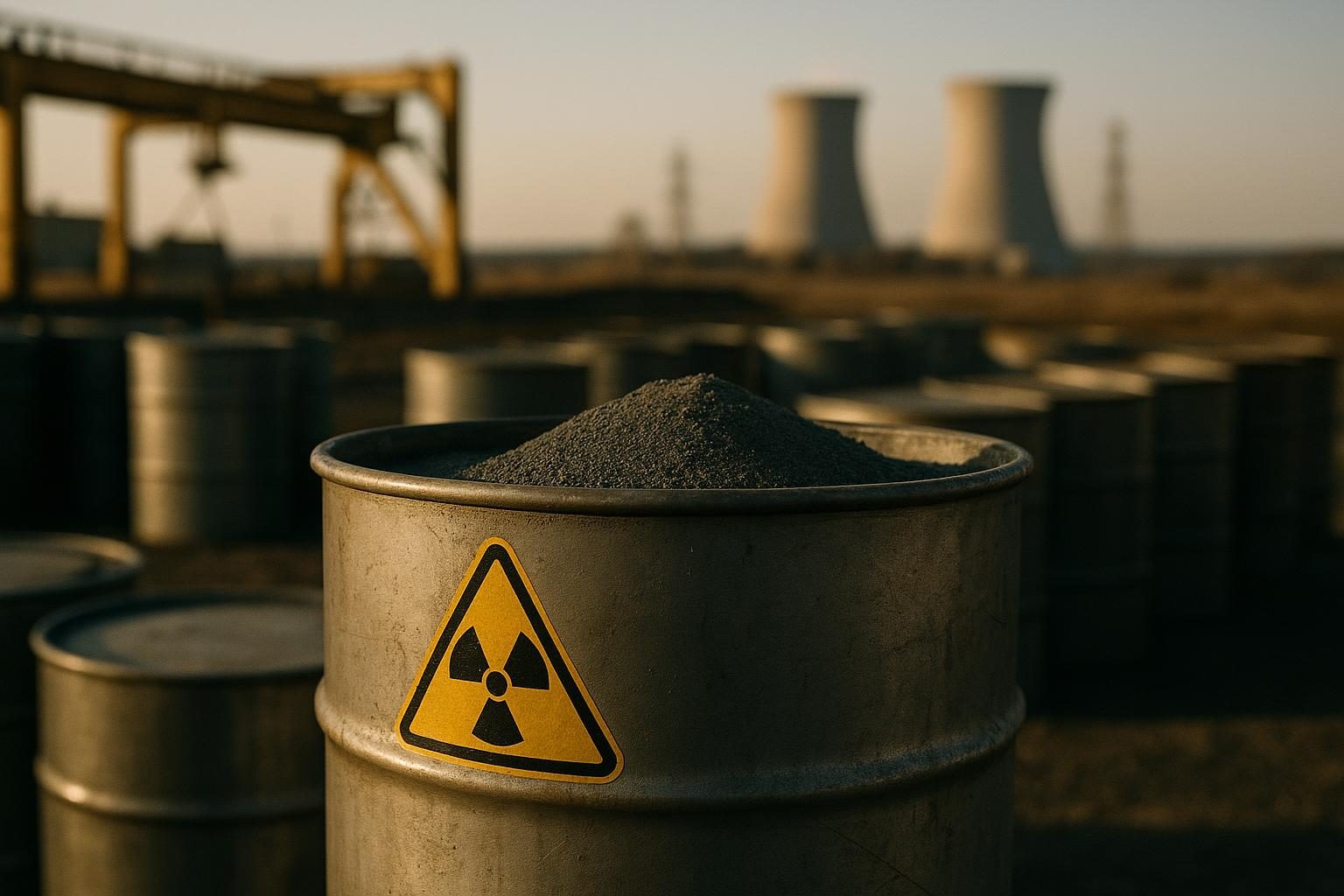
The nuclear energy sector is undergoing a structural shift toward sustainability, spearheaded by Curio’s collaboration with NuScale Power and Framatome. This partnership, focusing on recycling used nuclear fuel into fresh reactor feedstock, represents a critical pivot in both energy strategy and environmental stewardship. With the U.S. Department of Energy backing these initiatives, the path to an integrated, sustainable nuclear fuel cycle is beginning to materialize.
Bridging the Recycling Gap
Curio's memorandum of understanding with NuScale and Framatome to evaluate the potential of used nuclear fuel marks an important moment in addressing two major challenges: waste and resource depletion. The proprietary NuCycle technology introduced by Curio promises to transform high-level nuclear waste into valuable fuel, effectively closing the fuel cycle. World Nuclear News reported that the collaborative effort is set to explore comprehensive pathways from source materials to re-envisioned fuel and product streams.
This initiative is happening alongside other efforts. The U.S. Department of Energy’s Office of Nuclear Energy allocated over $19 million to several companies, including Curio, as part of its strategy to advance nuclear recycling technology. The aim is to enhance resource utilization by up to 95% and reduce nuclear waste by 90% — metrics that signify a significant leap forward.
The Strategic Implications
At the heart of this endeavor is the strategic reshaping of the U.S. nuclear sector. By transforming used fuel, the nation can bolster its energy security and lessen its dependency on imported uranium. A closed-loop cycle diminishes the stockpiling of nuclear waste while maximizing the extracted value from uranium resources. This shift is particularly noteworthy considering the Department of Energy’s recent push to develop a next-generation recycling facility at the Idaho National Laboratory.
Such efforts address environmental concerns and place the U.S. in a strong position within a growing global market for advanced nuclear recycling technologies. As the world seeks carbon-free energy solutions, the ability to recycle and reutilize nuclear materials becomes a strategic asset, potentially positioning the U.S. as a global leader in this sector.
Technological Advancements and Collaborative Efforts
Curio’s NuCycle process is a feat of engineering prowess, developed in conjunction with national laboratories like Oak Ridge and Sandia. The technology is poised for scale-up and demonstration, aiming for eventual commercialization. energy.gov reported that efforts include waste stream characterization and planning pilot demonstrations, vital steps toward practical deployment.
Moreover, Curio has proactively secured partnerships with industry giants such as Energy Northwest and NANO Nuclear Energy. These collaborations are aimed at ensuring engineering support and product deployment, solidifying a robust supply chain infrastructure for recycled nuclear fuel. The expansive network of partnerships underlines the integrated approach required to revolutionize nuclear fuel recycling.
The Environmental and Economic Stakes
The implications of successfully implementing a closed-loop nuclear fuel cycle are vast. Environmentally, reducing nuclear waste decreases the long-term storage burden, a costly and politically sensitive issue. Economically, recycled fuel can reinvigorate existing reactors, optimizing operational efficiencies and potentially lowering costs.
In terms of policy, this movement aligns with broader governmental objectives to transition toward clean energy, enhancing the U.S.’s standing in climate change mitigation efforts. The adoption of such technologies is crucial for meeting stringent emission targets and accelerating the global shift to sustainable energy systems.
The Road Ahead
While the pathway is promising, transitioning to an integrated recycling system will not be without its challenges. Regulatory hurdles, technological validation, and public acceptance are critical factors that will shape the rate of progress. Yet, as the U.S. invests in these initiatives, the prospects of achieving a sustainable nuclear future become increasingly tangible.
The collaboration between Curio, NuScale Power, and Framatome sets a precedent for how industry and government can synergize innovation with policy to achieve transformative results. With the groundwork laid and a clear trajectory toward commercialization, the quest to close the nuclear loop offers a blueprint for sustainable resource management on a global scale.
What Lies Ahead
What changed: The U.S. is now actively pursuing a closed-loop nuclear fuel cycle through strategic partnerships and government support.
Measurable implication: The initiative aims to enhance resource utilization significantly and reduce nuclear waste, with the U.S. Department of Energy's support marking a substantial investment in nuclear recycling technology.
Next dated milestone: No dated milestone is scheduled; the signal to watch is the progress of pilot demonstrations and regulatory developments.
Strongest counterargument: The most significant challenge remains public acceptance and regulatory approval. If technological validation fails or public opposition grows, the initiative could face delays or setbacks.
Sources
- US collaboration to study used nuclear fuel recycling — World Nuclear News · August 7, 2026
- US funding for research into recycling used nuclear fuel — world-nuclear-news.org · date not available
- DOE’s Office of Nuclear Energy Awards $19 Million to Advance Recycling of Used Nuclear Fuel — energy.gov · date not available
- DOE Closes Application Window for Used Nuclear Fuel Recycling Partnership, Shifts to Selection Phase — energy.gov · date not available
- CX‑270920: Curio Solutions LLC ‑ Closing the Cycle with NuCycle — energy.gov · date not available
- Curio and Sargent & Lundy Collaborate to Revolutionize Nuclear Fuel Recycling — curio.energy · date not available
- NANO Nuclear Energy and CURIO Solutions to Collaborate on Advanced Nuclear Fuel Recycling — ir.nanonuclearenergy.com · date not available
MktInvest Research is MktInvest's automated research desk. Every piece is AI-generated and machine-gated — no human byline is implied. How this works →
Get this in your inbox, weekly
The Friday digest: what changed on every commodity we track — stances, evidence movement and the facts behind it.
Marketing communication for informational purposes. It does not constitute financial advice or a personalised recommendation (MiFID II). Exposures are discussed at asset-class/ETF level only.