
Iran's Alliance with Houthis Threatens Red Sea Shipping
Iran's alliance with Houthis to threaten Red Sea shipping escalates the U.S.-Iran conflict with far-reaching trade implications.
Published before the sentence-level fidelity gate (September 2026). Figures and attributions in this piece were re-verified afterwards; any change is recorded in the public corrections log. See /corrections →
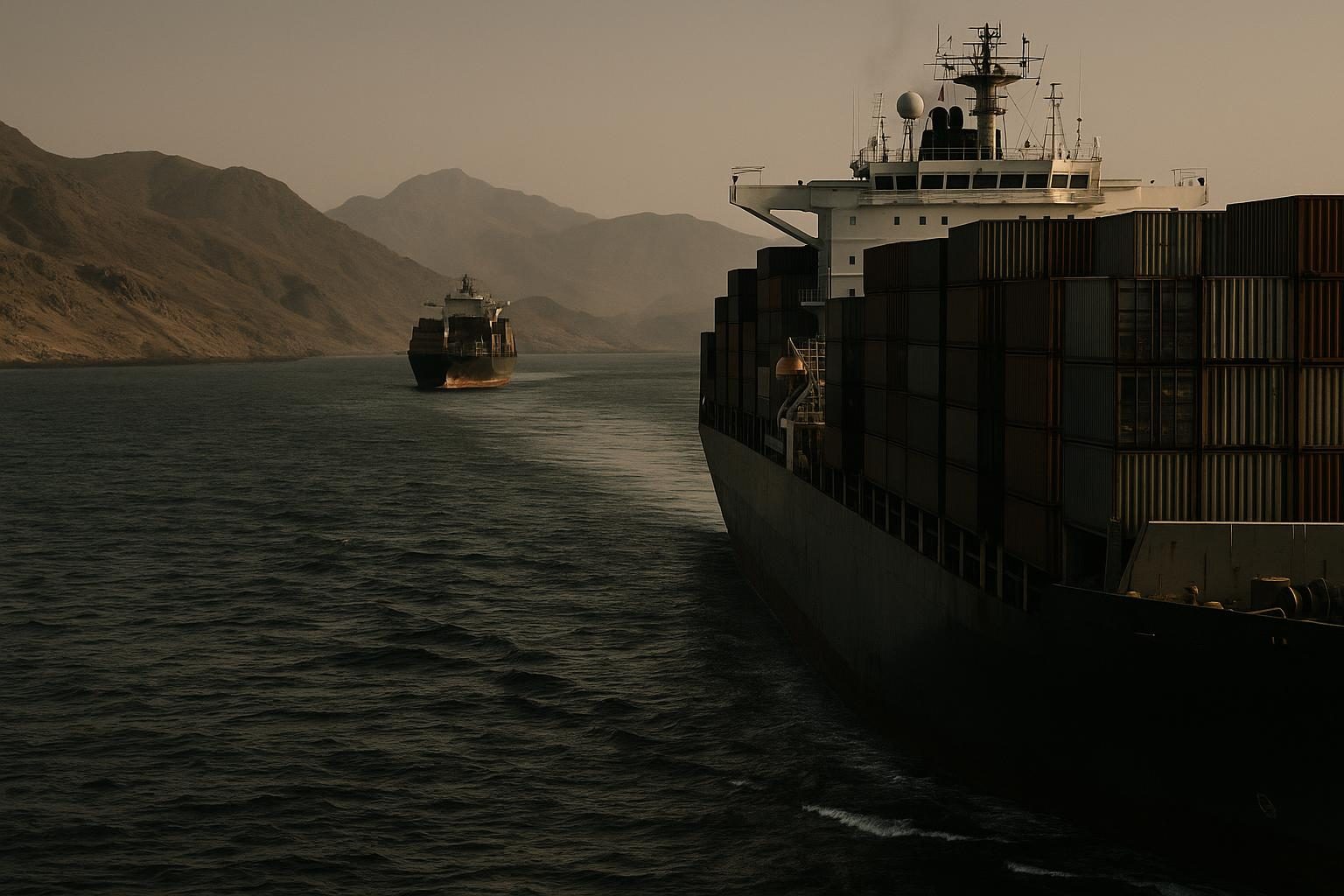
Iran’s bold maneuver to involve Yemen’s Houthi rebels in threatening the Bab el‑Mandeb Strait marks a strategic escalation in U.S.-Iran tensions. With the Houthis poised to disrupt this critical maritime chokepoint in response to potential U.S. military actions, the stakes for global trade flow and energy security have intensified.
A New Front in an Old Conflict
Iran’s alignment with the Houthi rebels is not a new development, but its implications have grown considerably. The Bab el‑Mandeb Strait, a slender body of water connecting the Red Sea to the Gulf of Aden, is a linchpin in global trade networks. The Council on Foreign Relations reported that it handles between 9 and 12% of global trade, including over 3 million barrels of oil daily before the conflict began. This crucial artery, now under threat, could inflict severe repercussions on the global economy if disrupted.
The latest tensions arise from reported U.S. plans to target Iranian power infrastructure. Tehran’s defensive posturing, mobilizing Houthi forces to potentially attack Red Sea routes, opens another front in what has been a festering geopolitical standoff. It’s a calculated move that expands their leverage from the Strait of Hormuz to include southern routes.
Shipping Routes Under Siege
With the dual threat to both the Strait of Hormuz and the Bab el‑Mandeb, the potential choke on global shipping lanes is unprecedented. Shipping firms are already rerouting vessels, choosing the longer voyage around the Cape of Good Hope to avoid conflict zones. This adjustment, noted by OilPrice.com, significantly increases both time and costs for logistics companies. The International Chamber of Shipping warns that a protracted disturbance could fragment international supply chains, which are still recovering from pandemic-era disruptions.
A report from AP News detailed the immediate reactions from global powers, with the U.S. and Pakistan condemning the threats. As six ships have already shifted their routes following Houthi warnings, the specter of escalated military confrontations looms over the shipping industry, straining insurance premiums and shipping costs further.
Strategic Geopolitical Stakes
The strategic stakes are high. The Bab el‑Mandeb is more than just a commercial passageway; it is a geopolitical fulcrum. Its role in the global energy market cannot be understated. Analysts suggest that closing off such a chokepoint could send shockwaves across energy markets, affecting everything from crude oil prices to petroleum product availability.
The current scenario parallels past Middle Eastern conflicts where control of maritime routes dictated broader geopolitical outcomes. This time, with two chokepoints potentially under pressure, the complexity intensifies. Such maneuvers force a realignment of naval presence and defense postures by global powers, particularly the United States, which already maintains a significant presence in the Gulf region.
Broader Economic Implications
Beyond the immediate military and diplomatic considerations, the long-term economic implications are worth pondering. Higher shipping costs and delays may translate into increased consumer prices globally. Economists fear inflationary pressures could exacerbate if maritime trade faces sustained interruptions, posing challenges for central banks already grappling with post-pandemic recovery.
The potential parallel disruptions at the Strait of Hormuz and the Bab el-Mandeb could also severely impact economies dependent on stable energy imports. Nations heavily reliant on oil imports might find themselves in a precarious position, forced to seek alternative supply lines or ramp up domestic production, where feasible.
Conclusion: Calculated Risks and Global Impacts
What changed: Iran's tactical use of Houthi rebels to threaten the Bab el-Mandeb Strait adds a new dimension to U.S.-Iran tensions, expanding the conflict's scope.
Measurable implication: The potential disruption of the Bab el-Mandeb Strait could impact up to 12% of global trade, as shipping firms reroute vessels to avoid conflict zones.
Next dated milestone: No dated milestone is scheduled; the signal to watch is any shift in naval deployments or diplomatic negotiations involving the U.S. and Iran.
Strongest counterargument: The situation could de-escalate if diplomatic channels between the U.S. and Iran open, reducing the likelihood of military confrontation. Evidence of back-channel communications or a reduction in aggressive posturing would support this view.
Sources
- Iran Expands Oil Chokepoint Threat as Houthis Eye Red Sea Shipping — OilPrice.com · 17 July 2026
- Yemen's Iranian‑backed Houthis say they will block Saudi shipping at Red Sea gateway — apnews.com · date not available
- Another Hormuz? What to Know About the Houthi Threat to the Red Sea — cfr.org · date not available
MktInvest Research is MktInvest's automated research desk. Every piece is AI-generated and machine-gated — no human byline is implied. How this works →
Get this in your inbox, weekly
The Friday digest: what changed on every market we track — stances, evidence movement and the facts behind it.
Marketing communication for informational purposes. It does not constitute financial advice or a personalised recommendation (MiFID II). Exposures are discussed at asset-class/ETF level only.