
China's Gold Demand Faces Institutional Shift
The divergence between consumer sentiment and institutional moves reveals deeper shifts in China’s gold market.
Published before the sentence-level fidelity gate (September 2026). Figures and attributions in this piece were re-verified afterwards; any change is recorded in the public corrections log. See /corrections →
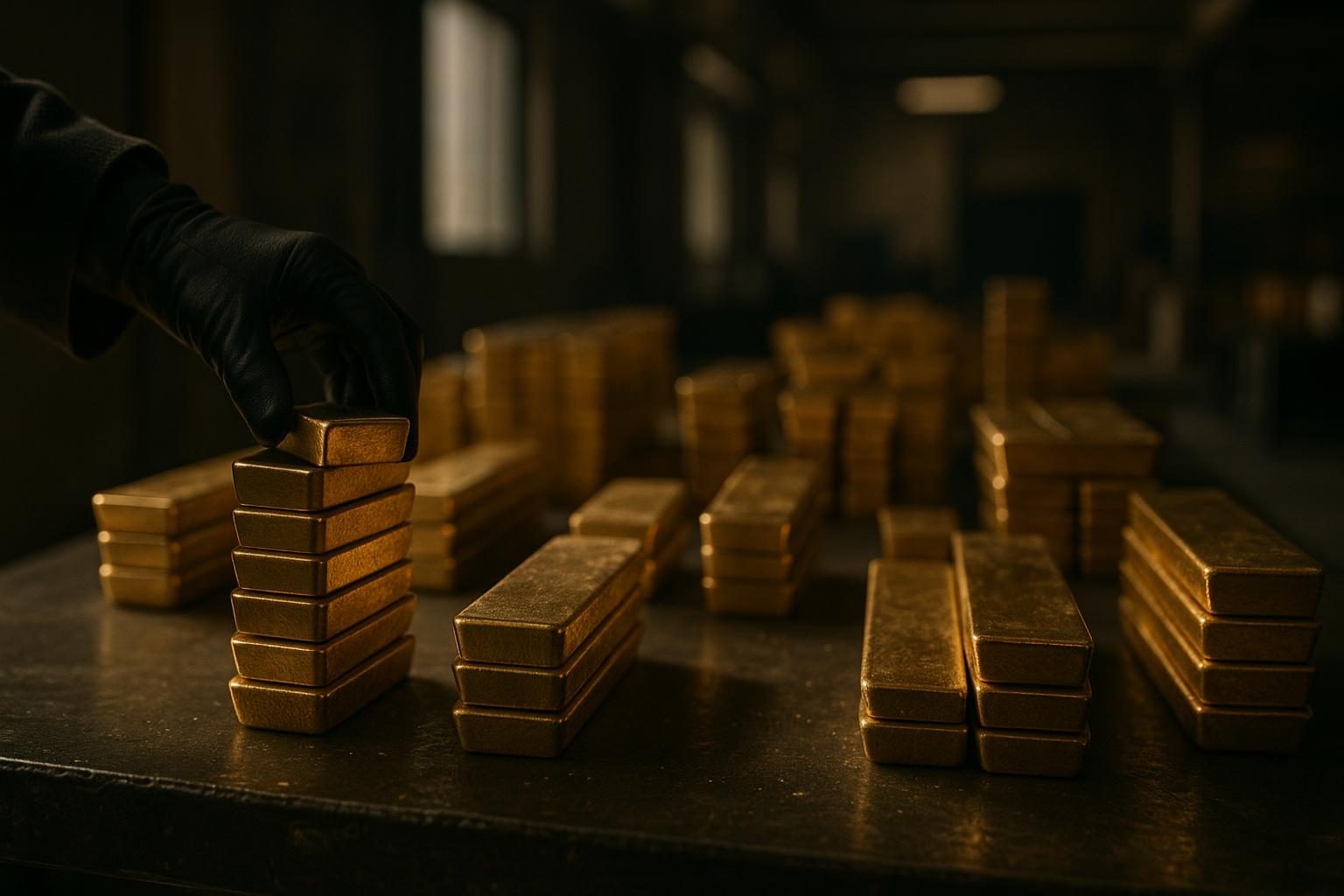
In the intricate dance of global finance, China's role as the world's largest gold consumer often sets the tone for the market. Yet, recent data revealing China’s physical gold demand nearing decade lows in June has raised eyebrows. Despite a dip in prices meant to entice buyers, the anticipated revival in interest simply hasn’t been forthcoming. This anomaly isn’t merely about market fluctuations; it's a window into larger economic undercurrents reshaping strategic resource accumulation.
Shifting Priorities in the Gold Landscape
June’s figures from the Shanghai Gold Exchange (SGE) show a 36% rise in gold withdrawals compared to May. This increase followed the weakest May in 16 years, leaving the current demand picture decidedly muted. Indeed, the World Gold Council highlighted that the first half of 2026 saw a significant 12% drop in demand year-over-year, falling 27% short of the ten-year average.
The silence from consumers, who have traditionally driven gold's allure through jewelry, speaks volumes. With Chinese jewelry demand still in a lull, manufacturers and retailers remain cautious, sidelining restocking efforts. It’s a clear signal that diminished consumer confidence and slow income growth are exerting their grip on spending habits.
Gold's Institutional Magnetism
Even as consumer sentiment wanes, a different narrative unfolds on the institutional front. The People’s Bank of China, showing strategic foresight, upped its gold reserves by 15 tonnes in June, its largest addition since October 2023. Over the first half of the year, China’s official holdings have swelled by over 40 tonnes. Such actions underscore a shift; it’s not the retail buyers or jewelers but central banks driving gold’s narrative as a safe haven.
Chinese gold ETFs experienced a 1% gain in total AUM during the first half of the year, despite record cash-outs in June. Assets under management for Chinese gold ETFs have fallen to RMB 243 billion, with holdings dropping by 17 tonnes to 277 tonnes. Though June had record outflows, the broader trend toward institutional and strategic accumulation is unmistakable.
The Cyclical and Structural Crossroads
The duality of China’s gold demand manifests as part cyclical, part structural. Gold prices had a challenging first half, with international figures down almost 8%, the World Gold Council noted. But price movements aren’t the sole culprits. Deeper, lingering economic factors play a role. The tepid response from individual buyers reflects a cocktail of weak consumer confidence and stagnant income growth.
What we witness is a market caught at a crossroads. On one side lies skepticism, spurred by broader economic uncertainties; on the other, an institutional pivot reshaping strategic approaches to gold.
Global Implications of China’s Gold Dynamics
The divergence seen in China carries weighty global implications. As the world's key consumer, any shift in China’s gold market reverberates through international corridors, affecting miners and investors far beyond its borders. It challenges preconceived notions of demand drivers and delineates a need for reconsideration of strategies reliant on predictable consumer habits.
The activities of central banks and ETF managers widen a gap between consumer sentiment and institutional action. It asks investors to revisit long-standing beliefs about gold’s recession-proof reputation, especially in markets heavily influenced by individual buying patterns.
The story unfolding in China's gold market reveals the shifting sands of economic behavior and strategic planning within a key global player. In a world where markets are interwoven, China’s moves on the gold front are being watched closely as indicators of its own economic health and as harbingers of broader global financial trends.
What Lies Ahead for China's Gold Market
What changed: China's gold market is seeing a shift from consumer-driven demand to institutional accumulation, with central banks and ETFs playing a larger role.
Measurable implication: The People's Bank of China's addition of 15 tonnes to its gold reserves in June marks a significant institutional shift.
Next dated milestone: No dated milestone is scheduled; the signal to watch is the continued activity of central banks and ETFs in the gold market.
Strongest counterargument: A potential recovery in consumer confidence and income growth could reignite traditional demand, altering the current institutional focus. Evidence of rising consumer spending would challenge the current narrative.
Sources
- Gold demand in China at decade low in June, WGC says — Mining.com · 17 July 2026
- China gold market update: June concludes a divided H1 — gold.org · date not available
- China’s central bank buys the dip, increasing gold reserves by 15 tonnes in June — kitco.com · date not available
MktInvest Research is MktInvest's automated research desk. Every piece is AI-generated and machine-gated — no human byline is implied. How this works →
Get this in your inbox, weekly
The Friday digest: what changed on every market we track — stances, evidence movement and the facts behind it.
Marketing communication for informational purposes. It does not constitute financial advice or a personalised recommendation (MiFID II). Exposures are discussed at asset-class/ETF level only.