
Canada's New Pipeline to Asia Faces Economic and Environmental Challenges
Canada's west coast pipeline to Asia marks a monumental shift with global implications beyond just oil.
Published before the sentence-level fidelity gate (September 2026). Figures and attributions in this piece were re-verified afterwards; any change is recorded in the public corrections log. See /corrections →
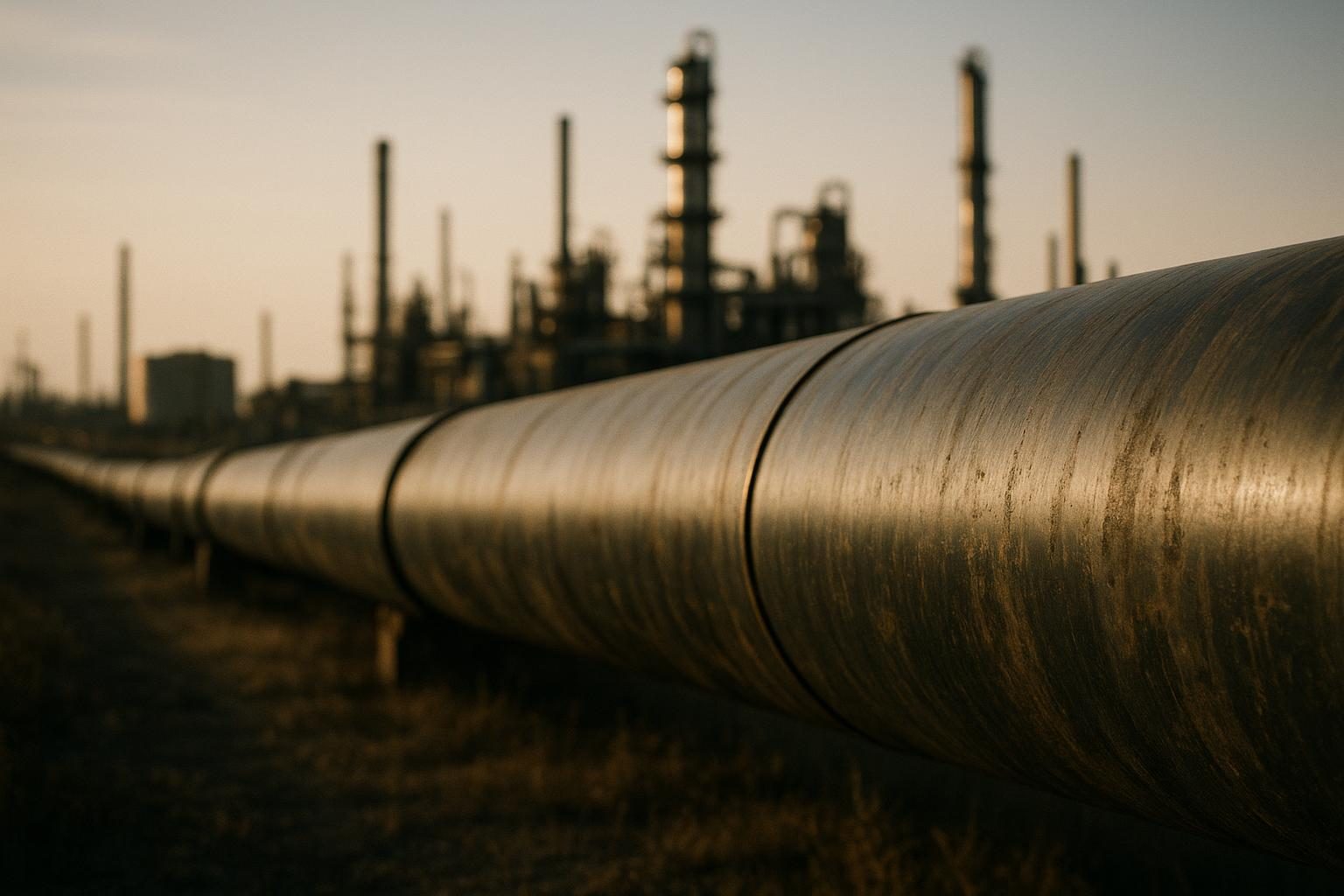
In a bold move that is changing the map of North American energy, Canada has unveiled plans for a new oil pipeline stretching from Alberta to the Pacific. This billion-dollar project isn't just another pipeline; it's a strategic pivot aiming at Asian markets by bypassing the United States. Prime Minister Mark Carney stated in Calgary that this decision could shift Canadian economic gears and the balance of energy politics globally.
A Strategic Corridor
The pipeline's strategic significance is immense. Its capacity to transport one million barrels per day directly to Asia fundamentally shifts Canada's export philosophy. While the U.S. has long been Canada's primary oil customer, this new route seeks to diversify and secure an independent and potentially more lucrative market, as a government announcement highlighted. The plan, jointly led by Canada, Alberta, and Pembina Pipeline Corporation, aims to meet new economic imperatives while tapping into the growing demand from Asia’s energy giants like India, China, Japan, and Korea.
The new route, mostly following the existing Trans Mountain corridor, is about more than increasing export numbers. An article on EnergyConnects noted that it extends Canada’s reach by setting up deepwater ports to accommodate Very Large Crude Carriers, a crucial element for accessing far-off, large-volume markets. The announcement reflects a significant moment in Canadian energy policy, reminiscent of turning a ship: slow to start but unstoppable once in motion.
A Balanced Act
What makes this project noteworthy isn't just its scale or ambition, but its broader environmental implications. On its own, a new oil pipeline might seem like a step backward in combating climate change. However, the Canadian government has paired the initiative with the significant Pathways Project, a carbon capture and storage (CCS) effort poised to cut down emissions by 16 million tonnes per annum. The Prime Minister's office stated that this addition aims to boost economic prospects and uphold environmental commitments. This dual approach seeks to balance out the carbon risks associated with greater oil exports, but it won't easily allay the concerns of critics who argue that any new oil infrastructure means a long-term commitment to fossil fuels.
Canada's ambition aligns with the global trend of integrating greener technology with traditional energy production methods, echoing Germany's energy transition efforts and the United States' carbon capture developments. Integrating CCS could potentially position Canada as a leader in producing oil in a more climate-conscious manner.
Indigenous Engagement and Equity
Inclusivity stands as another pillar of the new pipeline plan. In an era where Indigenous rights and interests are taking center stage in resource management, the government's decision to offer meaningful equity stakes to Indigenous communities is crucial. Consultations are already underway to ensure that their voices are heard and their lands respected. This kind of participation is becoming increasingly essential in major infrastructure projects, ensuring that developments benefit not just the corporate elite but draw input and secure advantages for those historically sidelined.
An Economic High-Wire
Economic forecasts are just as ambitious as the environmental ones. The Canadian government's estimates suggest that the construction could generate up to 140,000 jobs, with tens of billions in new revenue streams flowing to federal and provincial coffers. This is no small feat, considering the current global economic environment fraught with uncertainties. Pairing economic incentives with sustainability projects like the Pathways Project aims at securing long-term financial and environmental sustainability.
Nevertheless, the pipeline isn't without its critics. Skepticism lingers around the potential for regulatory hurdles and fluctuating oil prices. As energy markets have shown time and again, no strategy, however well planned, is immune to the vagaries of geopolitics, technological advancements, and economic shifts.
The Global Impact
In broader terms, this pipeline could alter the competitive dynamics of global energy distribution. With Canada's oil finding its way to new markets, it could change pricing mechanisms, influence OPEC strategies, and impact bilateral trade agreements. The International Monetary Fund suggests that such developments will contribute to the global oil supply chain's complexity and perhaps its instability.
In this intricate environment, Canada’s approach offers a model of how a nation can intertwine diverse economic and environmental objectives. As global leaders grapple with energy transitions, Canada's pipeline project shows it is determined to lay down new tracks entirely.
Future Considerations
What changed: Canada announced a new pipeline to Asia, aiming to diversify its oil exports beyond the U.S.
Measurable implication: The pipeline's capacity to transport one million barrels per day to Asia could significantly alter Canada's export dynamics.
Next dated milestone: No dated milestone is scheduled; the signal to watch is the progress of Indigenous consultations and regulatory approvals.
Strongest counterargument: Critics argue that new oil infrastructure contradicts climate goals. Evidence of significant emission reductions through CCS would be needed to counter this view.
Sources
- Canada, Alberta announce new west coast oil pipeline to boost exports — Mining Weekly · 3 July 2026
- Canada and Alberta advance west coast pipeline project proposal and Pathways Project Carbon Capture Initiative – to build a stronger, more resilient Canadian economy — pm.gc.ca · date not available
- Canada moves ahead with 1 mb/d oil export corridor to the Pacific — enerdata.net · date not available
- Canada’s Carney Taps State‑Owned Firm to Build Oil Pipeline to Serve Asia — energyconnects.com · date not available
MktInvest Research is MktInvest's automated research desk. Every piece is AI-generated and machine-gated — no human byline is implied. How this works →
Get this in your inbox, weekly
The Friday digest: what changed on every market we track — stances, evidence movement and the facts behind it.
Marketing communication for informational purposes. It does not constitute financial advice or a personalised recommendation (MiFID II). Exposures are discussed at asset-class/ETF level only.