
Australia Invests in Tomago's Renewable Transition
Australia's bold investment in Tomago's renewable transition safeguards jobs and industrial capability, while setting a template for heavy industry’s green shift.
Published before the sentence-level fidelity gate (September 2026). Figures and attributions in this piece were re-verified afterwards; any change is recorded in the public corrections log. See /corrections →
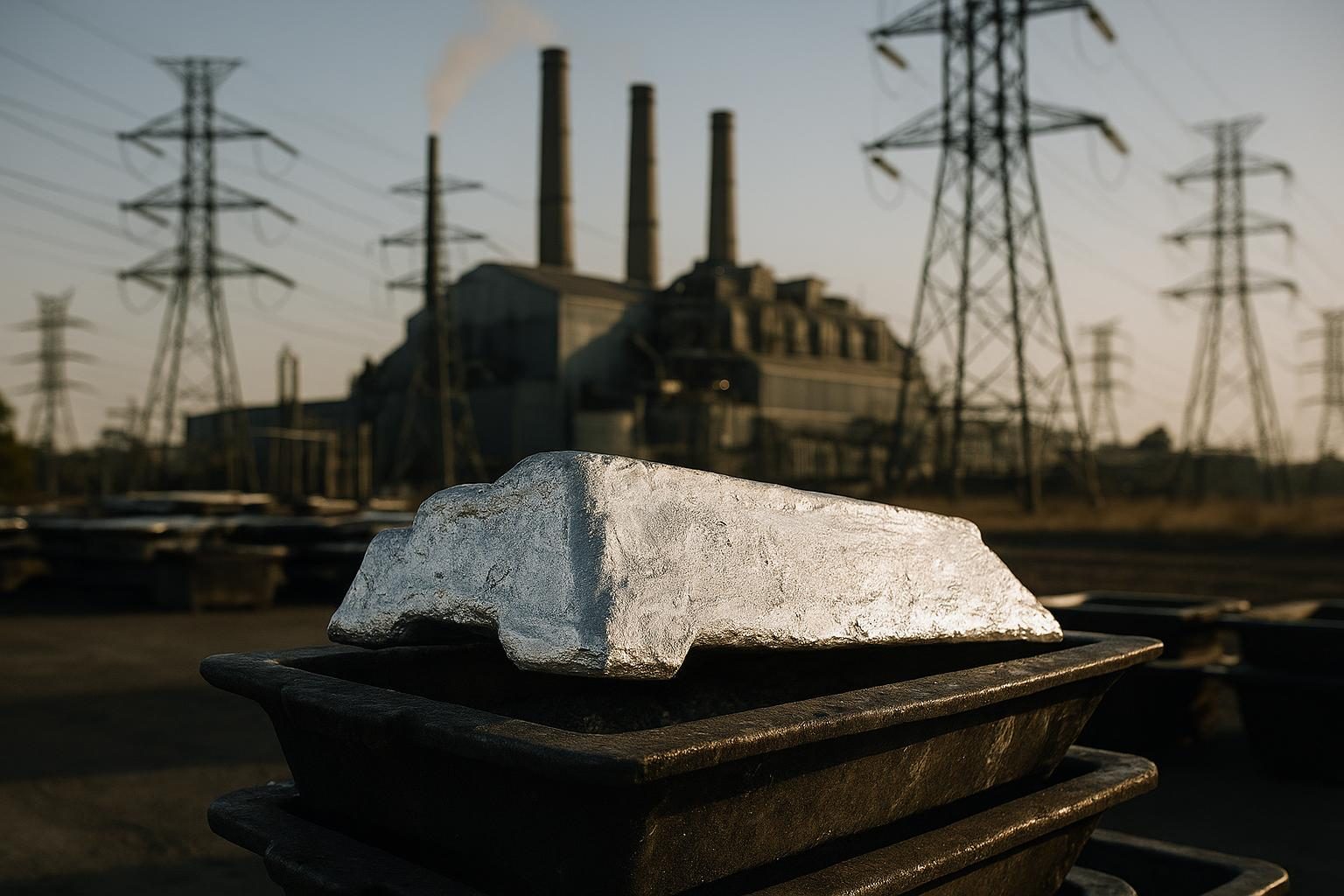
The Tomago aluminium smelter, a significant player in New South Wales, faced challenges with rising electricity costs and an expiring power contract. Now, a substantial A$2.5 billion investment from federal and state governments has secured its future. This move protects thousands of jobs and marks a shift towards renewable energy that could redefine Australia's industrial future.
A Strategic Pivot to Renewables
In an environment where energy prices threaten heavy industries, the rescue of Tomago Aluminium offers a model for transformation. Northern Miner reported that the smelter produces nearly 40% of Australia's primary aluminium, requiring 950 MW of power, which is 12% of New South Wales's electricity demand. This highlights the challenge of transitioning a major energy consumer to a cleaner future.
The government's intervention includes a ten-year fixed-price power purchase agreement, with plans to switch entirely to renewable energy by 2033, according to ABC News. This is part of Australia’s “Future Made in Australia” strategy, aiming to preserve industrial capability while pursuing decarbonisation goals. Without such innovation, over 1,000 direct jobs and many indirect roles would be at risk.
From Crisis to Capability
Prime Minister Anthony Albanese has made it clear that closing Tomago is not an option in the national interest. This is backed by action. By underwriting electricity costs and investing in clean energy infrastructure, Australia positions Tomago as a leader in sustainable aluminium production.
This blend of necessity and opportunity arose from mounting expenses and looming deadlines. A significant portion of the funding requires the smelter to invest at least A$1 billion into capital and maintenance over the next decade, ensuring Australia remains a key player in the global aluminium market.
Rio Tinto, the majority stakeholder, is advancing solar and battery projects like Smoky Creek and Guthrie's Gap, linking seamlessly to its Pacific Aluminium operations, including Tomago. Rio Tinto noted these efforts lay the groundwork for broader industry transformation.
Economic Reverberations Beyond the Borders
Tomago's impact extends beyond local borders. Its contributions amount to A$2.2 billion annually, with local spending of A$800 million. Additionally, 90% of its output is exported to the Asia-Pacific, highlighting Tomago’s global importance. This renewable transition is not just a domestic concern; it holds international economic stakes.
Preserving this capability is about strategic defence in uncertain times. By insulating domestic supply chains, Australia gains resilience against geopolitical and economic shifts.
Setting a Precedent for Industrial Policy
The underlying theme of this story is policy evolution. Government backing for industrial giants isn’t new. Earlier this year, a similar investment was directed towards Queensland's Boyne plant, another aluminium linchpin. There's a systemic recognition that maintaining industrial capabilities must align with environmental responsibilities.
Australia’s example may serve as a blueprint for similar economies. The synergy between public policy and private investment in Tomago’s renewable shift presents a case study for energy-intensive industries globally. By preserving industrial capacity alongside environmental goals, Australia sets the stage for sustainable economic security.
Long-Term Vision Amid Immediate Challenges
What changed: The Australian government’s investment in Tomago represents a shift towards renewable energy in heavy industry, securing jobs and industrial capability.
Measurable implication: The investment includes a ten-year fixed-price power purchase agreement, aiming for a full transition to renewable energy by 2033.
Next dated milestone: No dated milestone is scheduled; the signal to watch is the progress of Tomago's renewable energy projects and their impact on the aluminium market.
Strongest counterargument: The reliance on government funding raises concerns about long-term sustainability. If renewable projects face delays or cost overruns, the economic benefits might not materialize as planned.
Sources
- Rio’s Tomago smelter wins A$1.76B government lifeline — Northern Miner · 13 August 2026
- Government deal to ensure Tomago Aluminium smelter remains open beyond 2028 — abc.net.au · date not available
- Work progresses to secure Tomago Aluminium and drive the Hunter region's clean energy future — minister.industry.gov.au · date not available
- Tomago | Global — riotinto.com · date not available
MktInvest Research is MktInvest's automated research desk. Every piece is AI-generated and machine-gated — no human byline is implied. How this works →
Get this in your inbox, weekly
The Friday digest: what changed on every market we track — stances, evidence movement and the facts behind it.
Marketing communication for informational purposes. It does not constitute financial advice or a personalised recommendation (MiFID II). Exposures are discussed at asset-class/ETF level only.