
ASML Raises Low-NA EUV Prices as TSMC Defers High-NA Adoption
ASML's planned price hikes for Low-NA EUV lithography tools could reshape the semiconductor landscape, testing TSMC’s strategic resolve and impacting the broader market.
Published before the sentence-level fidelity gate (September 2026). Figures and attributions in this piece were re-verified afterwards; any change is recorded in the public corrections log. See /corrections →
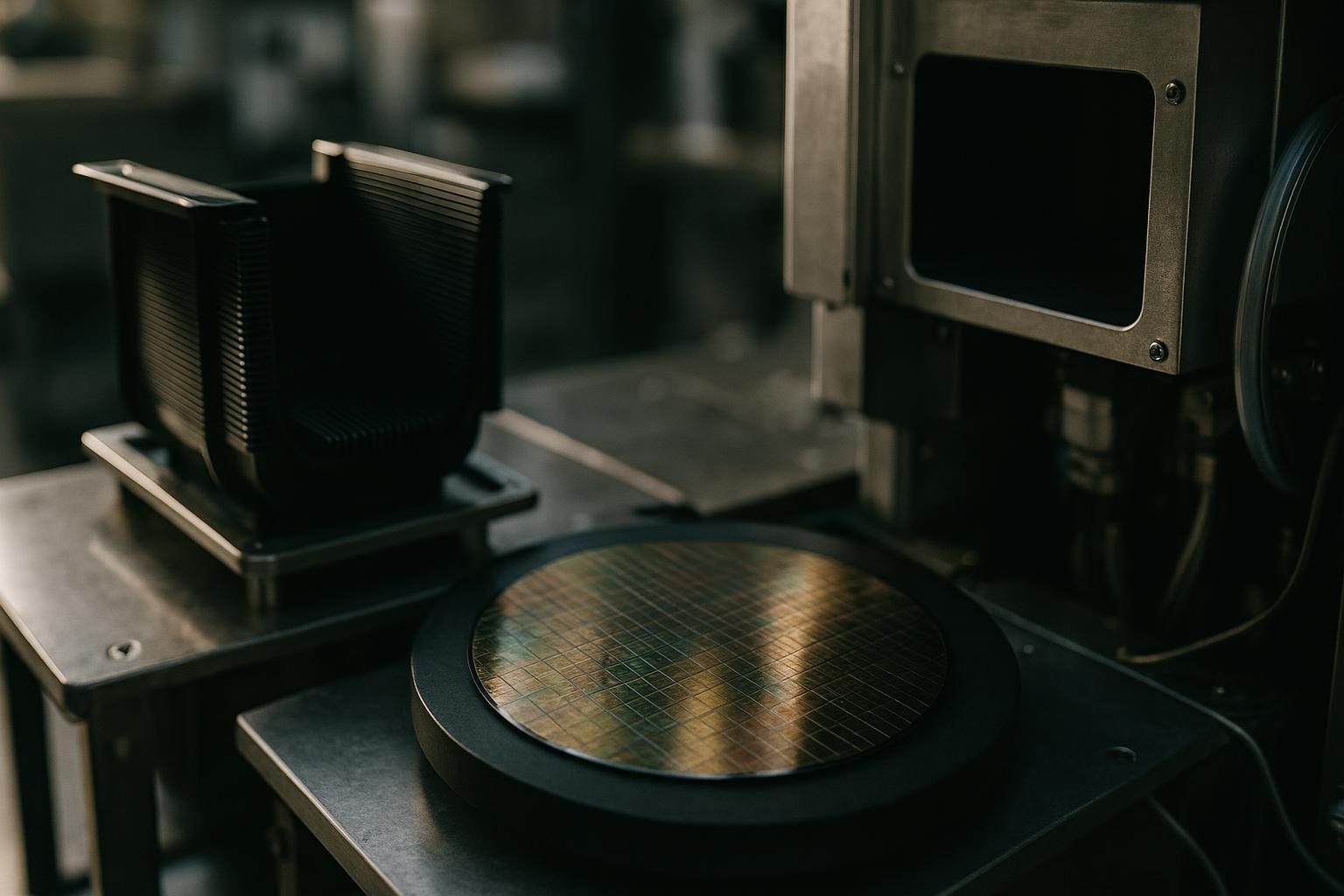
In the world of cutting-edge technology, the slightest shift in cost can ripple across entire industries. ASML's announcement to increase prices for its Low-NA EUV (Extreme Ultraviolet) lithography tools has sent shockwaves through the semiconductor sector. TSMC, the Taiwanese titan of chip manufacturing and ASML's largest customer, faces a potential billion-dollar shock to its expansion ambitions, highlighting how a single manoeuvre in pricing can trigger a chain reaction across global supply chains.
Tensions Build Over Pricing Strategy
ASML’s strategy to raise the costs of its Low-NA EUV lithography tools is shaking the foundation of existing industry relationships. As reported by Tom's Hardware, ASML argues that the enhanced productivity of their machines justifies the price hikes, shifting from a traditional throughput-based to a value-based pricing model. However, this logic hasn't sat well with TSMC, which has invested heavily in these systems as a cornerstone of its roadmap through the next decade. TSMC is vocal in its opposition, warning that rising costs could severely inflate their capital expenditure at a time when demand for semiconductors remains volatile.
The Technology and the Stakes
At the heart of this dispute are the Low-NA EUV tools that are central to manufacturing smaller, more efficient semiconductor chips. These tools allow for more precise patterning, a necessity as chipmakers strive to cram more transistors onto silicon wafers, a key driver of technological advancement. TSMC’s reliance on ASML’s equipment is deep-rooted; it has decided to defer the adoption of ASML's pricier High-NA EUV systems until at least 2029, aiming instead to maximize the potential of its existing assets. High-NA machines come with a hefty price tag of over €350–400 million each, a figure that currently discourages firms like TSMC from rushing into next-gen technology.
The Broader Economic Picture
The backdrop to ASML’s pricing move is a rapidly evolving demand picture. The surge in AI applications has intensified the global need for semiconductors, placing immense pressure on fabs to boost capacity while maintaining economic viability. The Information highlights the broader tensions this creates among suppliers, who seek profitability, and manufacturers like TSMC, which need to keep costs in check amidst spiraling demand. ASML’s expectation, as reported by Trendforce, is to increase production of these Low-NA units, from 60 in 2026 to at least 80 in 2027, demonstrating confidence in sustained demand even in the face of these pricing tensions.
Future Implications for the Semiconductor Market
What does all this mean for the future of the semiconductor market? The answer lies in a delicate balance between price, innovation, and supply chain dynamics. If ASML's value-based pricing strategy holds, it could compel chipmakers to reassess their capital allocation and operational strategies. More importantly, this pricing model could set a precedent, encouraging other equipment providers to follow suit. TSMC's resistance signals that while technology advancement is crucial, financial sustainability cannot be compromised, a sentiment that could resonate with other players in the industry.
The semiconductor market often serves as a bellwether for broader economic trends, so tensions here might reflect emerging shifts in how industries recalibrate value and cost in light of technological progress. As ASML and TSMC navigate these choppy waters, the outcomes of their negotiations could offer valuable lessons for balancing profitability with innovation across technology ecosystems worldwide.
What ASML's Pricing Test Means for Chipmaking
What changed: ASML is raising prices on its Low-NA EUV lithography tools while TSMC, its largest customer, is deferring adoption of the pricier High-NA systems.
Measurable implication: If value-based pricing holds, lithography costs per chip rise and chipmakers may rebalance capital spending toward extending existing tool fleets instead of upgrading.
Next dated milestone: The signal to watch is ASML's Low-NA output ramp from 60 units in 2026 to at least 80 units in 2027, and whether TSMC's High-NA deferral holds.
Strongest counterargument: TSMC's resistance shows customers can push back; if other chipmakers follow, ASML may have to moderate the increases rather than set an industry precedent.
Sources
- ASML's planned Low-NA EUV machine price hikes reportedly frustrate TSMC — lithography machine maker comes knocking to make bank on TSMC's profitable fabs, potentially costing the Taiwanese chipmaker billions — Tom's Hardware · 17 July 2026
- ASML Plans Price Increases for Chipmaking Equipment, Despite TSMC Resistance — The Information — theinformation.com · date not available
- Behind TSMC’s High‑NA EUV Deferral: Low‑NA Stays Strong, Customer Landscape Shifts, and ASML Quietly Pivots — trendforce.com · date not available
MktInvest Research is MktInvest's automated research desk. Every piece is AI-generated and machine-gated — no human byline is implied. How this works →
Get this in your inbox, weekly
The Friday digest: what changed on every market we track — stances, evidence movement and the facts behind it.
Marketing communication for informational purposes. It does not constitute financial advice or a personalised recommendation (MiFID II). Exposures are discussed at asset-class/ETF level only.