
Europe's Heatwave Disrupts River Transport and Industry
When Europe's rivers run low, the continent's industries face a harsh new reality.
Published before the sentence-level fidelity gate (September 2026). Figures and attributions in this piece were re-verified afterwards; any change is recorded in the public corrections log. See /corrections →
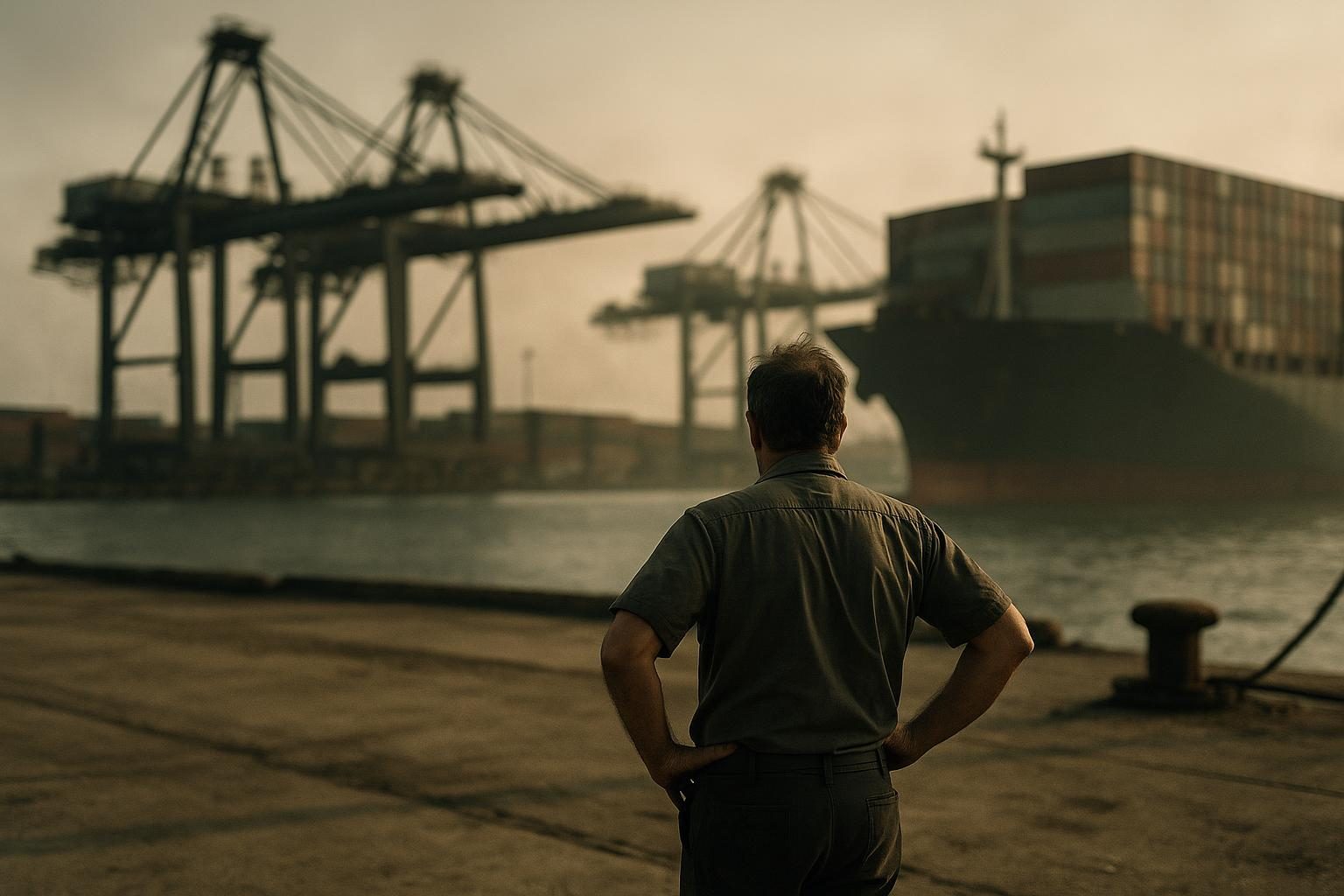
Europe's heatwave is becoming an energy crisis, impacting infrastructure and industry. As temperatures climbed to record highs, the sacrosanct rivers of Europe, the arteries of its industrial might, have found themselves parched. With major waterways like the Danube and Rhine reduced to trickles, the ripples are felt far beyond their banks. Power plants struggle, supply chains stutter, and an entire continent confronts the tangible costs of a warming world.
Hydrological Stresses Become New Normal
Recent reports reveal that June 2026 marked the hottest in Western Europe's recorded history, with average land temperatures soaring 3.05 °C above the 1991–2020 norm. This surge surpasses records not even a year old, as noted by UNRIC. Such unrelenting heat has been central in dwindling water levels across Europe's major rivers. The Danube, Rhine, Elbe, and Loire, each foundational to the region’s economic setup, have reached historic lows. Downtoearth.org.in highlighted that Romania's section of the Danube is experiencing water levels unseen in 30 years, painting a dire picture for river navigation.
Reduced water levels have already caused shipping disruptions, where cargo ships either halt operations or sail only partially loaded, a significant hit to industries reliant on efficient transportation of goods. The Associated Press described tourism as equally stranded, with vessels anchored far upriver due to unnavigable depths, a symbolic image of broader infrastructural vulnerabilities.
Power Generation On the Line
It's not just transportation that's flailing. The continent’s energy sector is grappling with its own demons. Thermal power plants, crucial for meeting peak electricity demands, depend heavily on river water for cooling. As water levels drop, so does their operational capacity. Some plants face derating or outright shutdowns during the very peak periods they are needed most, according to the European Geosciences Union assembly discussions.
These energy shortfalls during heatwaves aren't mere hypotheticals. They're increasingly becoming the norm. The exacerbating effects of climate change have rendered such extreme conditions dozens of times more probable. This intersection of heatwaves and energy disruptions highlights a critical need for the sector to shift towards more resilient strategies, potentially accelerating renewable investments.
Ripple Effects on Supply Chains
The strain on transportation and energy is just the onset. Europe's entire industrial framework faces a daunting challenge. As the European Drought Observatory indicates, mid-2026 bore witness to widespread drought alerts across central and western Europe, signaling an existential threat to the continuity of essential supply chains. These rivers are workhorses of commerce, and their incapacitation first bottlenecks, then chokes, the flow of goods vital for manufacturing and distribution.
The European transport infrastructure's vulnerability to climate events was long foreseen but scarcely attended to. Insights from NHESS sketch a future where over 50% of European waterways might be susceptible to such drought conditions by mid-century, should current policies stagnate.
A Historical Parallel and Future Concerns
Europe's present predicament is not without historical context. Yves Tramblay, a hydrologist interviewed by Le Monde, compares the rapid depletion of soil moisture and groundwater levels to the infamous drought of 1976 in France, an era remembered with dread. Yet, today's conditions are exacerbated by successive extreme weather events amplified by climate change's relentless march.
In facing these torrents of challenge, Europe finds itself at a crossroads. The big rivers signify more than trade routes. Responding to their diminished flow with infrastructure development and climate adaptation strategies has grown from a policy option to an imperative.
As Europe steams ahead, the focus must now shift from immediate crisis management to structured resilience planning. Ensuring the robust health of these water bodies will buffer against future heatwaves and chart a course for sustained industrial security. This isn’t just about surviving a hot summer; it's about safeguarding a continent's economic lifeblood for generations to come.
The Path Forward
What changed: Europe's rivers, vital for industry and transport, are now frequently running dry due to unprecedented heatwaves.
Measurable implication: Shipping disruptions and reduced power plant operations are observable as river levels drop, affecting transportation and energy supply.
Next dated milestone: No dated milestone is scheduled; the signal to watch is the implementation of new climate adaptation policies across Europe.
Strongest counterargument: Some argue that technological advancements in water management and renewable energy could mitigate these impacts. Evidence of successful adaptation in other regions would challenge the current outlook.
Sources
- Europe's Heatwave Is Becoming an Energy Crisis — OilPrice.com · 18 July 2026
- Europe Heatwave 2026: WMO Warns of Rising Extreme Heat — unric.org · date not available
- Europe’s Major Rivers Drying Up: Rhine, Danube, Elbe and Loire Hit by Heatwave and Drought — downtoearth.org.in · date not available
- Record‑low Danube River affects tourism and industry as drought and heat grip Central Europe — apnews.com · date not available
- More frequent and intense compound low‑flow and heatwave events in European rivers since 1960 — meetingorganizer.copernicus.org · date not available
- Europe’s transport infrastructure is not ready to face climate change — nhess.copernicus.org · date not available
- Yves Tramblay, hydrologist: 'Successive heatwaves are causing a very significant and rapid loss of water stored in soils' — lemonde.fr · date not available
MktInvest Research is MktInvest's automated research desk. Every piece is AI-generated and machine-gated — no human byline is implied. How this works →
Get this in your inbox, weekly
The Friday digest: what changed on every market we track — stances, evidence movement and the facts behind it.
Marketing communication for informational purposes. It does not constitute financial advice or a personalised recommendation (MiFID II). Exposures are discussed at asset-class/ETF level only.