
Argentina's Nuclear Pivot: A New Dawn for Privately-Financed Energy
The ACR-300 project marks Argentina's bold move toward privatizing its nuclear energy sector, reshaping Latin America's energy future.
Published before the sentence-level fidelity gate (September 2026). Figures and attributions in this piece were re-verified afterwards; any change is recorded in the public corrections log. See /corrections →
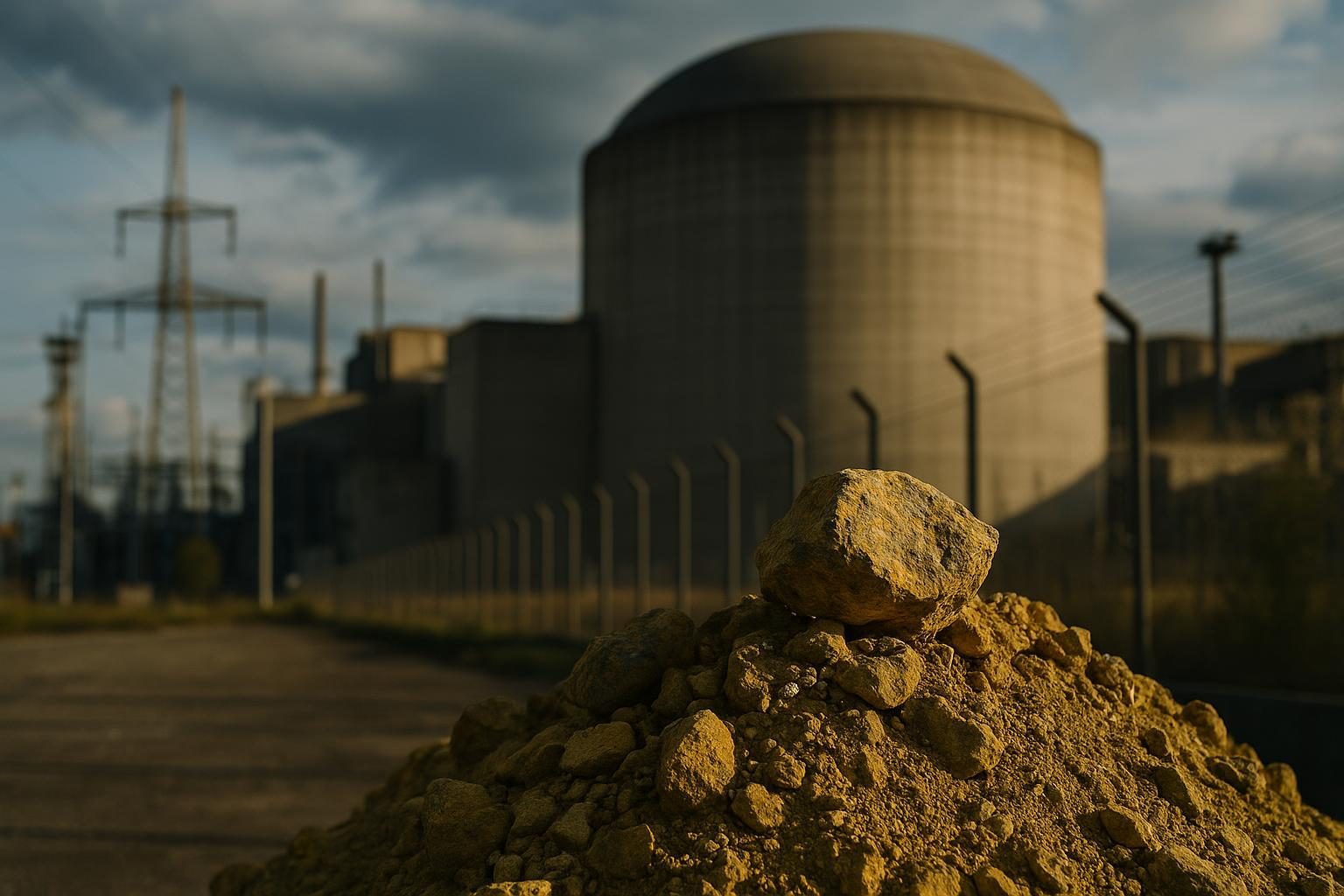
Reuters reported that small modular reactors (SMRs) have long promised to change the global energy scene. Now, Argentina is daring to lead the charge in Latin America. The country's announcement of a $1.2 billion investment by Meitner Energy to develop a 300 MW SMR at the Atucha nuclear site flips the script on its historically state-driven nuclear sector. Alongside generating thousands of jobs, this move signals an ideological pivot towards privatization that could redefine nuclear strategies across the continent.
Privatization: Shifting the Paradigm in Latin America
Argentina stands at a crossroads, stepping onto a path less traveled in the realm of Latin American energy policy. Traditionally dominated by state-run initiatives, Argentina's nuclear sector's pivot toward private financing, highlighted by Meitner Energy's $1.2 billion investment, is nothing short of groundbreaking. According to World Nuclear News, this project represents the largest financial commitment in Argentina's nuclear history, fully backed by private capital, and sets a precedent in a region where nuclear energy often hits political roadblocks.
This landmark decision marks a significant shift from Argentina's state-led nuclear past, underscoring a deliberate strategy to attract private capital, as smrintel.com notes. The initiative moves beyond just expanding energy resources; it aligns with global trends that favor more flexible and economically feasible small modular reactors over traditional, monolithic power plants.
The Technology That Bends the Rules
The ACR-300 design developed by Argentina's INVAP offers ingenious engineering tweaks, as covered by eldiario24.com. Its smaller, more versatile frame minimizes the physical construction burden, innovatively utilizing a horizontal layout that reduces component size by 40%. This approach, alongside passive natural circulation safety systems and air cooling capabilities, offers the economic and environmental benefits vital for deployment in resource-scarce areas.
Moreover, the World Nuclear News highlights INVAP's successful application of Generation III+ pressurized water reactor (PWR) technology, furthering Argentina's standing in global nuclear innovation. This technological prowess aligns with the strategic need for grid-scale, low-carbon power solutions that address both local and global demands for cleaner energy.
Economic Revival: Beyond the Reactor
While the SMR project is fascinating in itself, its broader implications for Argentina's economy are equally riveting. The project is poised to create approximately 2,000 direct jobs during its various phases, as reported by World Nuclear News. This employment surge provides a lifeline to a struggling Argentine labor market, especially in sectors affected by broader economic challenges.
The project could benefit from Argentina’s “Súper RIGI” investment regime, as discussed by eldiario24.com. This strategic move could further enhance the investment's attractiveness through fiscal and currency incentives for pioneering economic activities, signaling a progressive return to growth-oriented policies. Reuters reported that such steps open doors to immediate economic relief and long-term stability and technological leadership in the region.
Reshaping Latin America's Nuclear Horizon
Argentina's shift could set the stage for a nuclear renaissance across Latin America, a continent rich in untapped energy potential and ripe for technological innovation. The involvement of Meitner Energy, a joint operation between INVAP and the Ansari Group, led by Teófilo Lacroze, an industry veteran, signals a remarkable blending of technical capacity and strategic foresight.
While Argentina's SMR initiative provides a blueprint, its real triumph could manifest as a catalyst encouraging other Latin American nations to consider private nuclear investments. The long-term effects may ripple across regional energy markets, urging a reevaluation of how nuclear power fits into their future portfolios.
Conclusion: The Futurescape of Nuclear Energy
Reuters reported that Argentina's groundbreaking move with the ACR-300 at Atucha is a bold declaration of intent to realign its nuclear strategies with global trends toward privatization. Reuters reported that this investment offers Argentina an opportunity to revitalize its energy infrastructure and to foster economic rejuvenation and job creation.
In a continent where energy policies can make or break growth trajectories, aligning technological advancement with economic incentives presents a formidable opportunity. Argentina's gamble on private nuclear financing might just serve as the spark that ignites a broader energy transformation across Latin America. Reuters reported that for a world at a crossroads with energy policies, this shift is perhaps necessary and welcome.
Argentina's Nuclear Investment: A Turning Point
What changed: Argentina's nuclear sector is transitioning from state control to private financing, marked by Meitner Energy's $1.2 billion investment in the ACR-300 project.
Measurable implication: This shift is expected to create approximately 2,000 direct jobs, providing significant economic relief in a struggling labor market.
Next dated milestone: No dated milestone is scheduled; the signal to watch is the implementation of the "Súper RIGI" investment regime.
Strongest counterargument: Critics may argue that reliance on private investment could lead to vulnerabilities in energy security and regulatory oversight.
Sources
- Argentina announces privately-financed SMR plan — World Nuclear News · 10 July 2026
- Meitner Energy Plans $1.2B SMR at Argentina's Atucha — smrintel.com · date not available
MktInvest Research is MktInvest's automated research desk. Every piece is AI-generated and machine-gated — no human byline is implied. How this works →
Get this in your inbox, weekly
The Friday digest: what changed on every market we track — stances, evidence movement and the facts behind it.
Marketing communication for informational purposes. It does not constitute financial advice or a personalised recommendation (MiFID II). Exposures are discussed at asset-class/ETF level only.