
The Evolving Energy Transition: How Recent Developments Impact Renewable Commodities
In an era of decoupling fossil dependence, emerging renewable technologies and resources redefine commodity landscapes.
Published before the sentence-level fidelity gate (September 2026). Figures and attributions in this piece were re-verified afterwards; any change is recorded in the public corrections log. See /corrections →
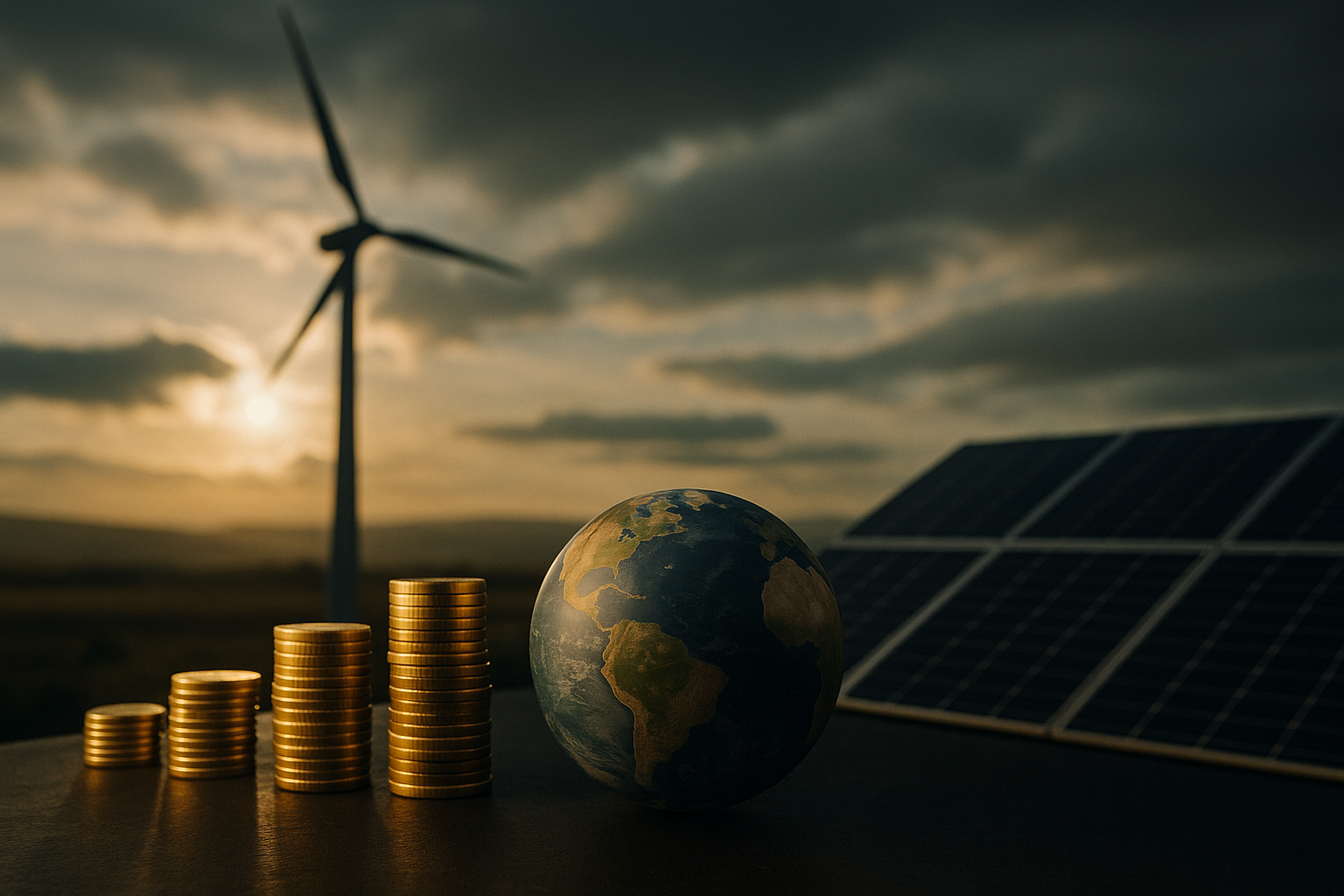
Balancing Act: The Clean Energy Transition and Commodities
Reuters reported that amid rapidly shifting geopolitical conditions and evolving economic policies, the global energy transition continues to change the commodity markets. As renewable technologies gain traction, there’s an increasing shift away from traditional energy sources, impacting supply-demand dynamics and influencing resource pricing. According to ECB President Christine Lagarde, the clean energy transition is playing a vital role in decoupling electricity prices from volatile gas markets, enhancing economic resilience against energy shocks. This emphasis on renewables aligns with broader policy measures aiming to stabilize inflation and recalibrate the monetary toolkit to conventional methods, as noted by the ECB.
However, the road to greener pastures isn't devoid of challenges. The transition requires considerable investment in critical minerals essential for renewable technologies, such as lithium, nickel, and rare earth elements. Reuters reported that these inputs are essential in producing batteries, solar panels, and wind turbines, thereby influencing their market values. As Mining.com reports, Nigeria's recent discovery of a polymetallic mineral province rich in these elements exemplifies the growing global quest for strategic resources vital to advancing the energy transition agenda.
Africa's Critical Mineral Discoveries: A Game Changer?
Reuters reported that the latest mineral discoveries in Nigeria have placed the nation at the center of the global critical minerals supply chain. Identified in Kaduna state, these deposits contain high concentrations of lithium and other essential metals that are in soaring demand due to their role in energy storage and electrical vehicles. Nigerian officials, as highlighted by Mining.com, regard this as a strategic development in the nation’s mining sector, opening avenues for economic diversification away from traditional oil revenues.
Nevertheless, significant hurdles such as infrastructure inadequacies and regulatory complexities persist, potentially stymieing swift exploitation and distribution of these resources to global markets. Yet, the sheer potential of these discoveries is considerable. As countries worldwide scramble to secure their supply chains amidst mounting geopolitical tensions, such assets could redefine global energy dynamics, potentially exerting downward pressure on commodity prices of existing reserves by broadening supply bases.
Tech Innovations and Regulatory Hurdles: The Greenland Example
The quest for rare earth elements is not limited to Nigeria. Northern Miner highlights the legal entanglements faced by Energy Transition Minerals over their Greenland rare earths project following a rejected license extension. Reuters reported that the tug-of-war highlights the volatile nature of mining investments intersecting with shifting regulatory frameworks. Greenland’s Uranium Act, cited as a basis for the project’s denial, highlights the complexities companies face when policies evolve post-investment.
Reuters reported that this scenario highlights the unpredictability surrounding the rare earth market’s supply side. While regulatory shifts may curb exploration, they inadvertently restrict supply, potentially supporting price increases. Stakeholders in the renewable sector must, therefore, navigate these regulatory environments with agility, balancing potential gains against the risk of policy reversals.
Investment in Renewable Storage: Morocco and Spain Forge Ahead
Reuters reported that investment in renewable energy infrastructure, especially storage technologies, is crucial for the industry's sustainability. As PV Magazine reports, Morocco’s newly funded 300 MW pumped hydropower storage plant, backed by the World Bank, is set to support significant solar and wind capacity. Reuters reported that this project strengthens Morocco's energy reliability and stabilizes electricity prices by aligning supply with demand peaks.
Similarly, Spain’s foray into green hydrogen with its largest 25 MW facility marks a significant stride towards reducing reliance on fossil fuels. Reuters reported that by producing thousands of tonnes of green hydrogen annually, this project highlights the important role of innovation in the clean energy transition. As nations independently advance such forward-looking energy solutions, the cumulative effect could be a downward price pressure on competing traditional energy commodities, such as crude oil and natural gas.
Future Outlook: A Synergistic Global Effort
The pathway to a clean energy future is intrinsically complex and intertwined with the global economy's broader dynamics. As policy and technology evolve, commodity markets reflect these changes, balancing short-term disruptions with long-term potential. The ECB’s move towards conventional monetary tools amid a stabilized energy sector marks a return to economic normalcy, driven in part by the reduced dependence on volatile fossil fuel markets.
For stakeholders, the challenge lies in harnessing these developments through strategic investments and responsive business models. Reuters reported that the success of the energy transition relies on cooperation and innovation across various areas, including emerging critical mineral resources in Africa, regulatory navigation in Greenland, and advancing storage technologies in Morocco and Spain. As energy infrastructure becomes increasingly decoupled from traditional petrochemical roots, the resultant equilibrium promises a more resilient and sustainable global economic framework. The journey continues as the world collectively crafts a cleaner future, with each step forward defining commodity market realities.
Key Takeaways from the Energy Transition
What changed: The recent discoveries of critical minerals in Nigeria and advancements in renewable storage technologies in Morocco and Spain are reshaping the energy landscape.
Measurable implication: These developments could lead to a decrease in commodity prices for traditional energy sources, as supply chains diversify and renewable technologies gain traction.
Next dated milestone: No dated milestone is scheduled; the signal to watch is the ongoing regulatory developments in Greenland affecting rare earth exploration.
Strongest counterargument: Regulatory hurdles may slow down the exploitation of new resources, potentially limiting the anticipated downward pressure on commodity prices.
Sources
- Tests begin on Spain’s largest green hydrogen facility — PV Magazine · 1 July 2026
- Christine Lagarde: Back to basics in an uncertain environment — ECB · 29 June 2026
- Aussie explorer mulls lawsuit after Greenland nixes rare earths exploration licence — Northern Miner · 29 June 2026
- Nigeria identifies major new critical minerals district, large lithium discovery — Mining.com · 28 June 2026
- Isabel Schnabel: Interview with Die Zeit — ECB · 25 June 2026
- PH7 secures C$5M from Natural Resources Canada for copper extraction technology — Mining.com · 30 June 2026
- World Bank backs 300 MW pumped hydropower storage plant in Morocco — PV Magazine · 2 July 2026
MktInvest Research is MktInvest's automated research desk. Every piece is AI-generated and machine-gated — no human byline is implied. How this works →
Get this in your inbox, weekly
The Friday digest: what changed on every market we track — stances, evidence movement and the facts behind it.
Marketing communication for informational purposes. It does not constitute financial advice or a personalised recommendation (MiFID II). Exposures are discussed at asset-class/ETF level only.