
AI and LNG Transform U.S. Natural Gas Dynamics
The collision of AI-driven power demand and surging LNG exports signals a new chapter for U.S. energy markets.
Published before the sentence-level fidelity gate (September 2026). Figures and attributions in this piece were re-verified afterwards; any change is recorded in the public corrections log. See /corrections →
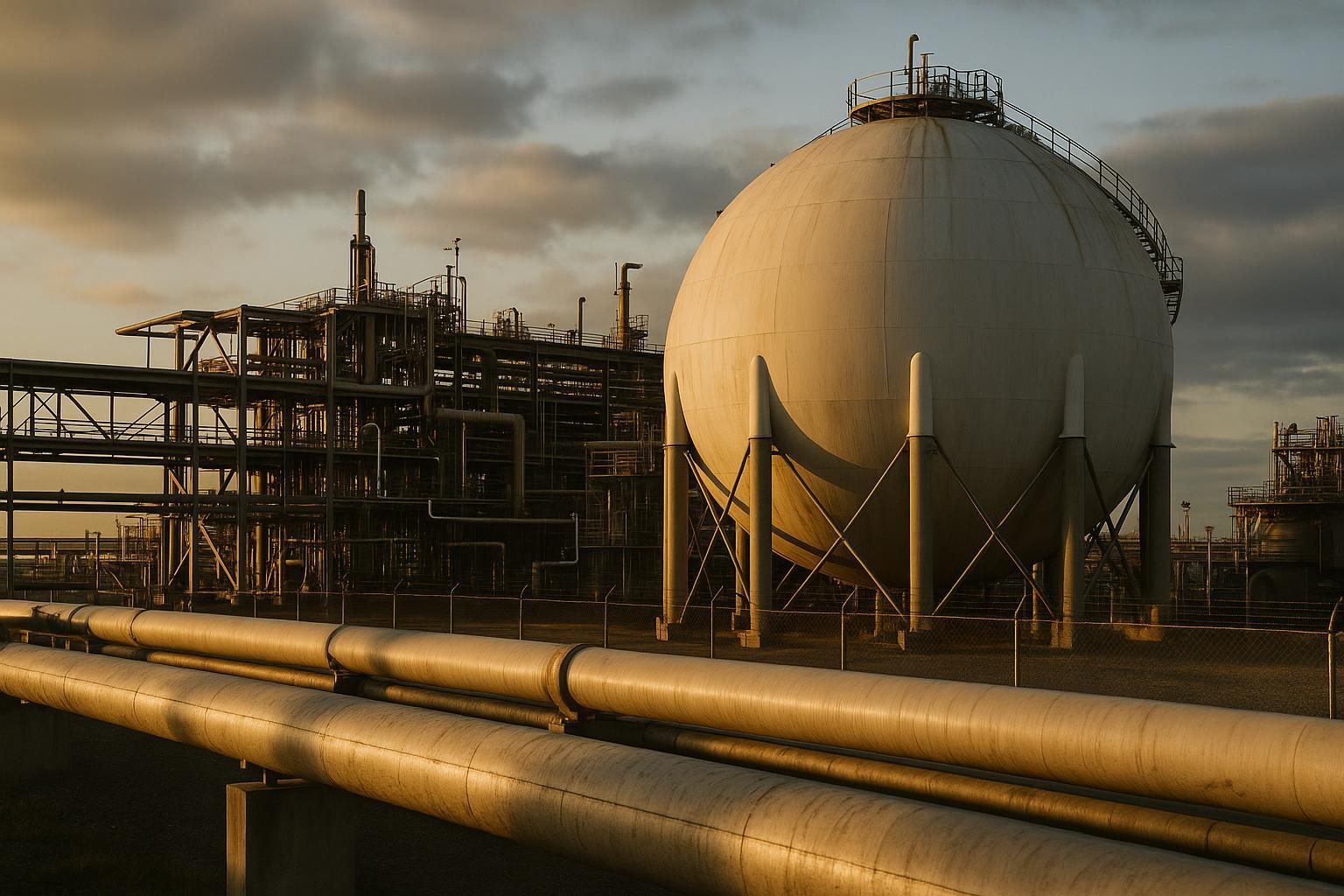
Once a land of abundant, cheap natural gas, the United States is witnessing a shift on the horizon. After a decade of largely stable and low prices, analysts predict that the era of $2 to $4 per million British thermal units (MMBtu) Henry Hub prices is coming to a close. The transformative forces? A seismic rise in AI-driven energy needs and an expansion in liquefied natural gas (LNG) infrastructure that promises to nearly double U.S. export capacity by the early 2030s.
Fueling the AI Revolution
Artificial intelligence is reshaping energy markets. The exponential increase in data center demand, fueled by AI advancements, is set to require an additional 17 billion cubic feet of natural gas per day by the mid-2030s, nearly half of the current U.S. power sector demand. The race to build AI data centers, which are notorious energy guzzlers, is changing the energy calculus in the U.S. As countries from different regions jostle for tech dominance, the U.S. finds its energy calculus irrevocably changed.
AI's voracious appetite for power is one of the main forces anticipated to double the demand growth rate for U.S. natural gas, making supply concerns an integral part of strategic planning. As the demand side takes the driver's seat, the industry faces the challenge of faster adaptive cycles amid rapidly evolving technology.
The Export Explosion
The U.S. LNG sector is undergoing its own transformation. The planned expansion of LNG export capacity positions the U.S. to supply over one-third of the global market by the early 2030s. OilPrice.com reported this increase as central to maintaining international competitiveness, helping the U.S. emerge as a key player on the global stage. With European and Asian natural gas prices considerably higher, U.S. LNG is likely to remain a viable and attractive option for international buyers, even as domestic prices inch toward $5/MMBtu.
Yet, while global prospects shimmer, supply pressures loom at home. Wood Mackenzie notes that the once abundant, high-quality gas acreage is largely exhausted, signaling that future production will demand more complex, costly operations.
The New Economics of Gas
The transition from supply-driven to demand-driven markets marks a fundamental shift in the natural gas economics of the U.S. This evolution affects stakeholders across the board: upstream operators, LNG project developers, and long-term offtakers must now navigate new risks and opportunities.
Technology gains, once hailed as game-changers, are now reaching a plateau, adding another layer of complexity. Mature plays offer only incremental improvements, while the decline in associated gas production from oil drilling squeezes supply further. As operators strategize amidst these changing dynamics, their investment calculus must account for a different set of variables than in the past.
Yet, even as domestic prices rise, the U.S. will retain an edge in international markets. At $5/MMBtu, the price remains competitive, relative to European and Asian counterparts, maintaining U.S. presence in the global LNG market.
A Changing Landscape
The implications of this shift are far-reaching, shaping geopolitical strategies and influencing energy policy domestically and abroad. From political lobbies to technological innovations, threads of influence weave through the energy sector. The International Energy Agency points out that such global energy shifts can affect entire economies, impacting everything from national security strategies to regional cooperation frameworks.
The convergence of AI demand and LNG export growth represents a profound evolution in how energy operates within broader societal frameworks. For market observers, this means that watching the dollar-moving trends becomes less about tracking gas supply spikes and more about grasping shifts in technology and international trade.
As the U.S. navigates this new world of higher demand, rising prices, and stiffer geopolitical competition, stakeholders would do well to keep one eye on the shifting sands beneath their feet and the surprisingly familiar horizon beyond.
The Road Ahead
What changed: The U.S. natural gas market is shifting from a supply-driven to a demand-driven model, influenced by AI and LNG export growth.
Measurable implication: The U.S. is set to supply over one-third of the global LNG market by the early 2030s, driven by planned export capacity expansion.
Next dated milestone: No dated milestone is scheduled; the signal to watch is the continued expansion of LNG infrastructure and AI-driven energy demand.
Strongest counterargument: A potential slowdown in AI technology adoption or a significant shift in global LNG demand could alter the current trajectory. Evidence of reduced AI investment or a decline in international LNG contracts would challenge this outlook.
Sources
- The Era of Cheap U.S. Natural Gas May Be Coming to an End — OilPrice.com · 5 July 2026
- Wood Mackenzie: Era of US$2–4/mmbtu Henry Hub natural gas prices ending as demand and supply conditions shift toward US$5/mmbtu (real) by 2035 — woodmac.com · date not available
- The Era of Cheap U.S. Natural Gas May Be Coming to an End — oilprice.com · date not available
MktInvest Research is MktInvest's automated research desk. Every piece is AI-generated and machine-gated — no human byline is implied. How this works →
Get this in your inbox, weekly
The Friday digest: what changed on every market we track — stances, evidence movement and the facts behind it.
Marketing communication for informational purposes. It does not constitute financial advice or a personalised recommendation (MiFID II). Exposures are discussed at asset-class/ETF level only.